By Chlotrudis Independent Film Society
Rating: 4 cats
Director: en Addelman | Samir Mallal
Country: canada
Year: 2009
Running time: 74
IMDB: http://www.imdb.com/title/tt1288595/
Jason says: “Asked to name the top three film industries in the world, nearly everybody would come up with the United States right away. A good chunk would probably mention India next; the word’s gotten out in the past few years. After that, though, most people would likely rattle off a half-dozen or so countries – Japan, China/Hong Kong, France, South Korea, maybe Russia, Italy, and the U.K. – and likely give up before even considering Nigeria. That’s because ‘Nollywood’ isn’t particularly concerned about exporting, but dominates its native land.
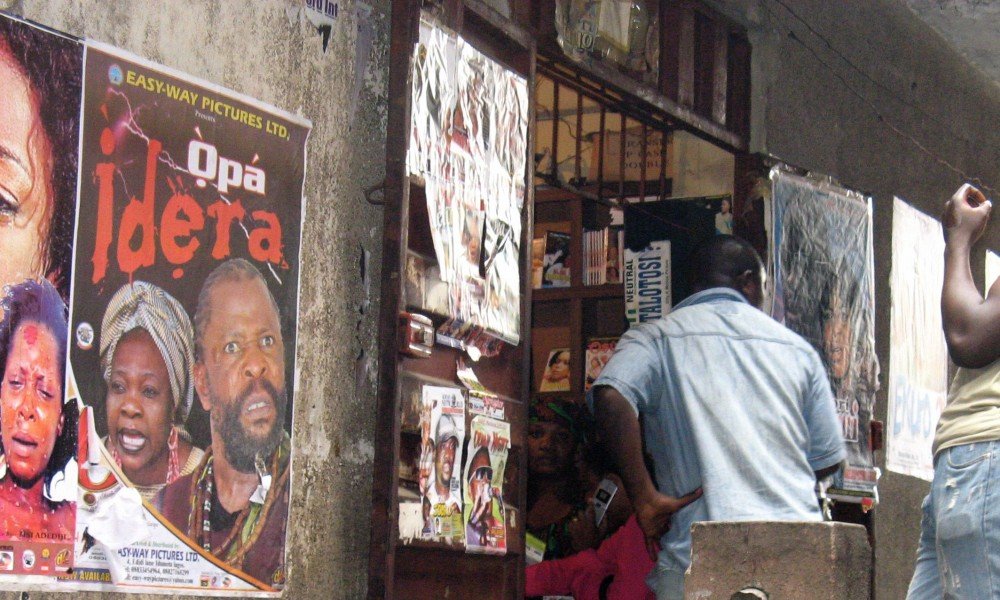
“Nollywood’s birthdate is given as 1992, financed by electronics merchants in Lagos, the country’s largest city. It’s a direct-to-video business – though Lagos is a city of fourteen million people, there are only three operating theaters, and none of them show Nollywood movies. It thrives because it’s good business – deliver something the audience wants (films that speak directly to African audiences) for a cost low enough to make it profitable. That means shooting on video, quickly, and with perhaps a less-than-experienced cast and crew.
“The movie is framed, in large part, around watching Lancelot Oduwa Imasuen shoot one of the dozens of Nollywood movies he’s directed. He’s one of Nigeria’s most popular directors, and we get a front row seat to just how bare-bones Nollywood filmmaking is. The crew is very young – many don’t look to be out of their teens – and Imasuen points out that they will likely move up in the industry quickly, maybe even directing movies themselves within a couple years. Sometimes folks on film crews get mistaken for gangsters.
“If there’s criminal involvement in Nollywood, though, the film doesn’t probe there. Its interests, in fact, lie more in the opposite direction – the extensive participation of evangelical Christians in the Nigerian film industry and the country in general. Many of the factories that formed the nation’s industrial base have been converted into churches, and we’re introduced to Helen Ukpabio, a one-time actress who has gone on to not only become one of the industry’s leading producers, but the head of one of the country’s largest churches. It’s an opportunity to demonstrate how religion can insinuate itself especially deeply during times of economic distress. It’s not anti-religious, but it does have a cautious tone about those who would exploit desperate people in desperate times.
“Examining Nigeria as a whole is an interesting side-journey for the film, though, not it’s primary purpose. For the most part, it sticks with giving us a look at Nollywood; the religious information gives us some insight to the moralistic story structure of many of the industry’s films. Filmmakers Ben Addelman and Samir Mallal do a nice job of mixing interviews, clips from movies, and behind-the-scenes footage to give us a good impression of Nollywood and Nigeria in general. We hear from actors and actresses like Bob-Manuel Udokwu and Uche Jumbo, and director Teco Benson. We learn about the history of Nigerian cinema from people like Eddie Ugbomah, who directed Nigerian features back in the 1970s and 1980s, before the movie industry collapsed. And we see plenty of clips of Nollywood films. As cheap as they look to outside eyes, they are also quintessentially African, mixing Christianity and witchcraft, telling stories of poverty and everyday life in Lagos.
“There’s something inspiring about that, especially at a film festival that celebrates independent film. Yes, Nollywood is completely commercial, to an extent that would make American studios blush. But they’re making movies Hollywood can’t, and doing it with incredible enthusiasm, which is exciting to learn about. 4 cats
“Seen 25 April 2009 at the Somerville Theater #5 (Independent Film Festival of Boston)”