
Movie | Buried Treasure | Director | Best Performance in a Leading Role |
Best Performance in a Supporting Role |Best Breakout Performance |
Original Screenplay | Adapted Screenplay | Music in a Film | Sound Design |
Editing | Cinematography | Production Design | Ensemble Cast | Documentary
Best Movie |
|
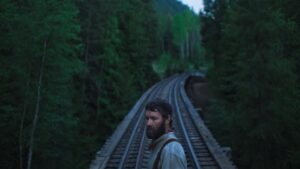  Train Dreams – This quietly powerful period drama transforms Denis Johnson’s compact 1996 novella into a reflective, visually rich cinematic experience. Anchored by a deeply felt, understated performance from Joel Edgerton as Robert Grainier — a laborer and logger in the early 20th-century Pacific Northwest — the film traces a life marked by work, love, loss, and the relentless advance of modernity. The narrative unfolds with a meditative calm, allowing the rugged landscapes and the rhythms of everyday toil to shape audience engagement as much as plot. Through contemplative pacing and evocative imagery, the movie situates Grainier’s unadorned existence against broader themes of change and resilience, with standout contributions from Felicity Jones and William H. Macy enriching the emotional texture. The adaptation’s use of languid narration and immersive cinematography deepens the sense of personal memory and meaning, balancing moments of intimacy with sweeping natural vistas. In its quiet insistence on dignity and endurance, Train Dreams stands as an affecting, thoughtfully crafted portrait of a man and a world in transition, where beauty and sorrow co-exist. –tm Train Dreams – This quietly powerful period drama transforms Denis Johnson’s compact 1996 novella into a reflective, visually rich cinematic experience. Anchored by a deeply felt, understated performance from Joel Edgerton as Robert Grainier — a laborer and logger in the early 20th-century Pacific Northwest — the film traces a life marked by work, love, loss, and the relentless advance of modernity. The narrative unfolds with a meditative calm, allowing the rugged landscapes and the rhythms of everyday toil to shape audience engagement as much as plot. Through contemplative pacing and evocative imagery, the movie situates Grainier’s unadorned existence against broader themes of change and resilience, with standout contributions from Felicity Jones and William H. Macy enriching the emotional texture. The adaptation’s use of languid narration and immersive cinematography deepens the sense of personal memory and meaning, balancing moments of intimacy with sweeping natural vistas. In its quiet insistence on dignity and endurance, Train Dreams stands as an affecting, thoughtfully crafted portrait of a man and a world in transition, where beauty and sorrow co-exist. –tm |
|
 It Was Just an Accident – There aren’t many films that can pull off the terror of being held captive and tortured, both psychologically and physically with sometime near-slapstick humor, but master director Jafar Panahi does just that with his latest film, IT WAS JUST AN ACCIDENT. When a man with a prosthetic leg arrives at a garage with his family seeking the repair of his car, mechanic Vahid recognizes the squeaking sound of that leg and is chilled. It’s a sound he remember after being held captive in an Iranian prison. The next day he finds the man and kidnaps him intending to kill him for the torture, but doubt creeps in as he never saw the man’s face — only heard the sound. He rounds up other former prisoners to determine this man’s fate, and the various twists and turns and viewpoints reveals make for a moralistic yet ultimately humanist story that is both chilling and powerful. –mrc It Was Just an Accident – There aren’t many films that can pull off the terror of being held captive and tortured, both psychologically and physically with sometime near-slapstick humor, but master director Jafar Panahi does just that with his latest film, IT WAS JUST AN ACCIDENT. When a man with a prosthetic leg arrives at a garage with his family seeking the repair of his car, mechanic Vahid recognizes the squeaking sound of that leg and is chilled. It’s a sound he remember after being held captive in an Iranian prison. The next day he finds the man and kidnaps him intending to kill him for the torture, but doubt creeps in as he never saw the man’s face — only heard the sound. He rounds up other former prisoners to determine this man’s fate, and the various twists and turns and viewpoints reveals make for a moralistic yet ultimately humanist story that is both chilling and powerful. –mrc |
|
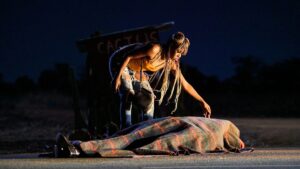 On Becoming a Guinea Fowl – In what is surely one of the best opening sequences in recent memory (maybe almost as good as Kaganoda’s After Yang) Zambian filmmaker Rungano Nyoni (whose previous flim, I Am Not a Witch was a Buried Treasure nominee in 2019) tells a story of a young woman who returns to her village from the big city, only to be flummoxed all over again by the traditions and head turning from serious issues of her elders. Like Panahi, Nyoni uses unexpected and absurdist humor to tell a powerfully sobering story, and first time actor Susan Chardy (nominated in this year’s Breakout category) is compelling. From Buried Treasure to Best Movie nomination, it’s nice to see Nynoni building an audience. –mrc On Becoming a Guinea Fowl – In what is surely one of the best opening sequences in recent memory (maybe almost as good as Kaganoda’s After Yang) Zambian filmmaker Rungano Nyoni (whose previous flim, I Am Not a Witch was a Buried Treasure nominee in 2019) tells a story of a young woman who returns to her village from the big city, only to be flummoxed all over again by the traditions and head turning from serious issues of her elders. Like Panahi, Nyoni uses unexpected and absurdist humor to tell a powerfully sobering story, and first time actor Susan Chardy (nominated in this year’s Breakout category) is compelling. From Buried Treasure to Best Movie nomination, it’s nice to see Nynoni building an audience. –mrc |
|
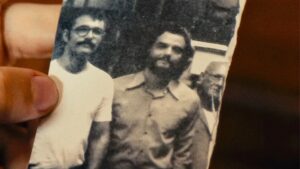 The Secret Agent – Mostly set in his coastal home town of Recife, Brazil, filmmaker Kleber Mendonça Filho draws from some the best parts of previous features AQUARIUS and BACURAU (along with his great companion doc PICTURES OF GHOSTS) and alchemizes them into a period thriller in love with genre films (among them, epics, humanist dramas, absurdist comedies and grade-Z horror flicks!) and also life itself. With a diverse ensemble headed by Wagner Moura, a slippery, zig-zagging narrative and an expertly curated soundtrack, although set in 1977, THE SECRET AGENT harmonizes with the here and now to a prescient degree. –ck The Secret Agent – Mostly set in his coastal home town of Recife, Brazil, filmmaker Kleber Mendonça Filho draws from some the best parts of previous features AQUARIUS and BACURAU (along with his great companion doc PICTURES OF GHOSTS) and alchemizes them into a period thriller in love with genre films (among them, epics, humanist dramas, absurdist comedies and grade-Z horror flicks!) and also life itself. With a diverse ensemble headed by Wagner Moura, a slippery, zig-zagging narrative and an expertly curated soundtrack, although set in 1977, THE SECRET AGENT harmonizes with the here and now to a prescient degree. –ck |
|
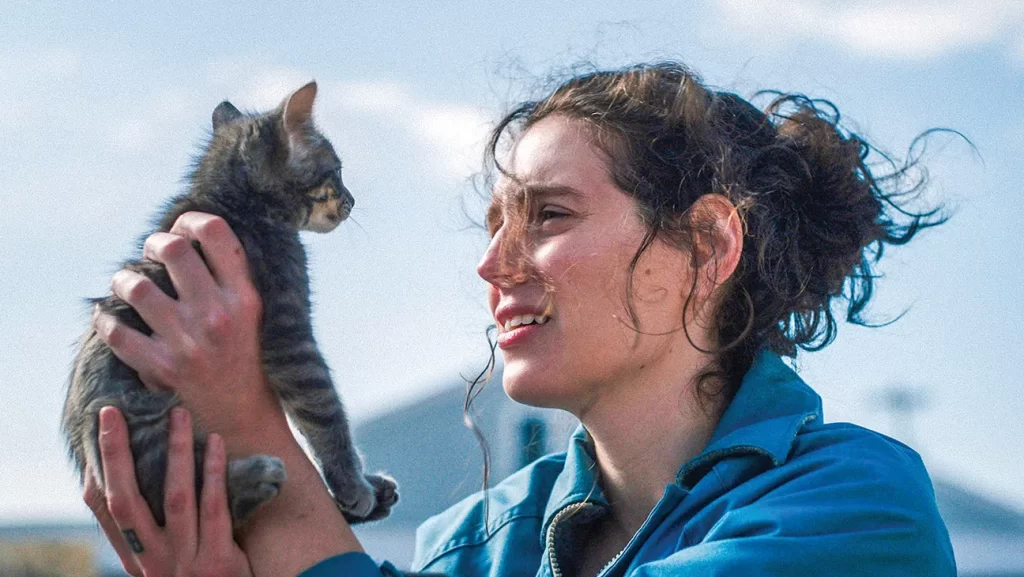 Sorry, Baby – A quietly devastating story wrapped in dry humor, Sorry, Baby follows a young woman stumbling through grief, and the strange absurdity of moving forward when nothing feels resolved. With a voice that’s both razor-sharp and disarmingly vulnerable, the film captures the small, surreal moments that sit alongside deep loss—the awkward conversations, the inappropriate laughter, the things left unsaid. It resists melodrama, instead offering something more intimate and honest: a portrait of healing that isn’t linear or clean. What makes Sorry, Baby linger is its balance of tone—tender without being sentimental, funny without undercutting its weight. It feels less like a traditional narrative and more like being let into someone’s inner world, where pain and humor coexist. By the end, it doesn’t hand you closure—it hands you recognition. And that’s exactly why it’s worth watching. Sorry, Baby – A quietly devastating story wrapped in dry humor, Sorry, Baby follows a young woman stumbling through grief, and the strange absurdity of moving forward when nothing feels resolved. With a voice that’s both razor-sharp and disarmingly vulnerable, the film captures the small, surreal moments that sit alongside deep loss—the awkward conversations, the inappropriate laughter, the things left unsaid. It resists melodrama, instead offering something more intimate and honest: a portrait of healing that isn’t linear or clean. What makes Sorry, Baby linger is its balance of tone—tender without being sentimental, funny without undercutting its weight. It feels less like a traditional narrative and more like being let into someone’s inner world, where pain and humor coexist. By the end, it doesn’t hand you closure—it hands you recognition. And that’s exactly why it’s worth watching. |
|
 Universal Language – The three seemingly unrelated stories in this film revolve around a fictional city which is a mashup of the abysmally drab Winnepeg and the delightfully colorful Tehran. One story follows two grade school sisters, wandering the streets of the city, to find a way to retrieve money trapped under the ice in order to help a classmate. Another story is about a tour guide Massoud who tries to make the most mundane sites of Winnepeg appear interesting to the groups of ever increasingly befuddled tourists he’s tasked to lead. The last story is about a disgruntled office worker living in Quebec (played by the director/writer Matthew Rankin) who quits his job to go visit his long estranged sick mother in Winnepeg. Intermixed in all of this are many oddities including turkeys galore, an unusually mesmerizing butcher shop, a Tim Horton’s that serves tea out of samovars alongside donuts, a bingo parlor that gives out Kleenex as prizes and a woman who collects her own tears. The production design throughout these scenes was amazing in detail and color or lack thereof. Some might say that this puzzle had all the pieces just thrown on the floor at the end. Others may see a fit. The story is told in a unique, asynchronous way that really sticks with the viewer who will be trying to make sense of it all long after the film has ended. The film was shot on 16mm film giving it a grainy vintage feel. Rankin’s obsession with rectilinear images and use of linear camera movements was clear. Additionally this was contrasted by extended meandering takes, featuring long pans and sweeping zooms. This film checks most all boxes including stellar cinematography, production design, original screenplay, directing and acting, with oh so endearing performances by a few of the kids and a fantastic break out performance by Rojina Esmaeili who plays Negin, the young driven school girl attempting to help her classmate. –jb Universal Language – The three seemingly unrelated stories in this film revolve around a fictional city which is a mashup of the abysmally drab Winnepeg and the delightfully colorful Tehran. One story follows two grade school sisters, wandering the streets of the city, to find a way to retrieve money trapped under the ice in order to help a classmate. Another story is about a tour guide Massoud who tries to make the most mundane sites of Winnepeg appear interesting to the groups of ever increasingly befuddled tourists he’s tasked to lead. The last story is about a disgruntled office worker living in Quebec (played by the director/writer Matthew Rankin) who quits his job to go visit his long estranged sick mother in Winnepeg. Intermixed in all of this are many oddities including turkeys galore, an unusually mesmerizing butcher shop, a Tim Horton’s that serves tea out of samovars alongside donuts, a bingo parlor that gives out Kleenex as prizes and a woman who collects her own tears. The production design throughout these scenes was amazing in detail and color or lack thereof. Some might say that this puzzle had all the pieces just thrown on the floor at the end. Others may see a fit. The story is told in a unique, asynchronous way that really sticks with the viewer who will be trying to make sense of it all long after the film has ended. The film was shot on 16mm film giving it a grainy vintage feel. Rankin’s obsession with rectilinear images and use of linear camera movements was clear. Additionally this was contrasted by extended meandering takes, featuring long pans and sweeping zooms. This film checks most all boxes including stellar cinematography, production design, original screenplay, directing and acting, with oh so endearing performances by a few of the kids and a fantastic break out performance by Rojina Esmaeili who plays Negin, the young driven school girl attempting to help her classmate. –jb |
|
Buried Treasure |
|
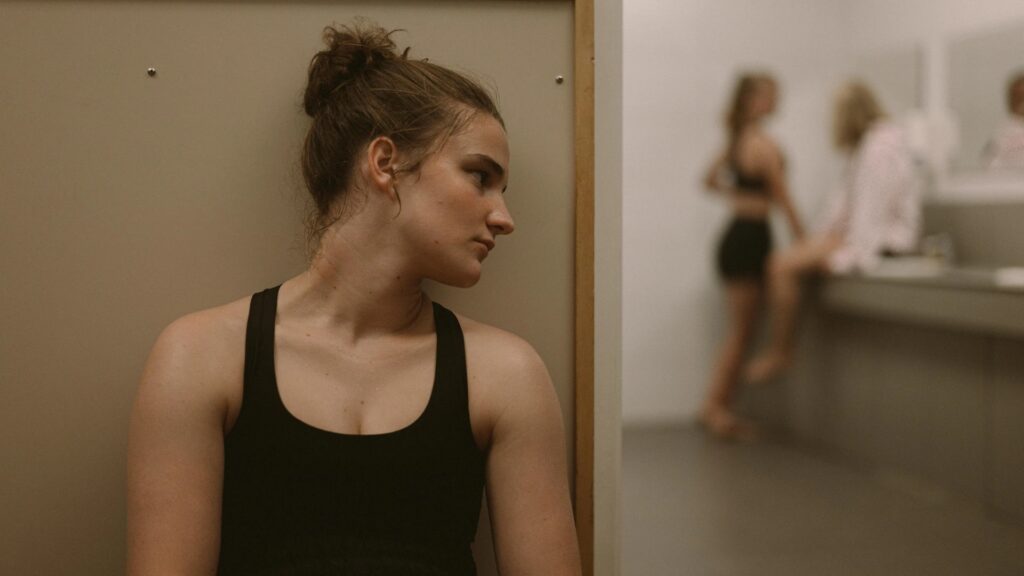 Julie Keeps Quiet – Leonardo Van Dijl’s debut narrative is an intense, highly internal film about a young woman on the verge of becoming a star, professional tennis player who finds herself in the position of being involved in the dismissal of her coach after a fellow tennis player being trained by that same coach commits suicide. There is a temptation for people watching this film to become frustrated about why Julie is in fact, keeping quiet, yet that is the entire point. The reality is the entire film follows Julie’s agonizing thought-process on whether or not to keep quiet. It’s fascinating features an absolutely incredible debut performance by tennis player Tessa Van den Broeck who captures both the internal conflict and the outward athleticism of the main character. And the sound design… wow! Those tennis balls, and feet scuffing the court. Intense. –mrc Julie Keeps Quiet – Leonardo Van Dijl’s debut narrative is an intense, highly internal film about a young woman on the verge of becoming a star, professional tennis player who finds herself in the position of being involved in the dismissal of her coach after a fellow tennis player being trained by that same coach commits suicide. There is a temptation for people watching this film to become frustrated about why Julie is in fact, keeping quiet, yet that is the entire point. The reality is the entire film follows Julie’s agonizing thought-process on whether or not to keep quiet. It’s fascinating features an absolutely incredible debut performance by tennis player Tessa Van den Broeck who captures both the internal conflict and the outward athleticism of the main character. And the sound design… wow! Those tennis balls, and feet scuffing the court. Intense. –mrc |
|
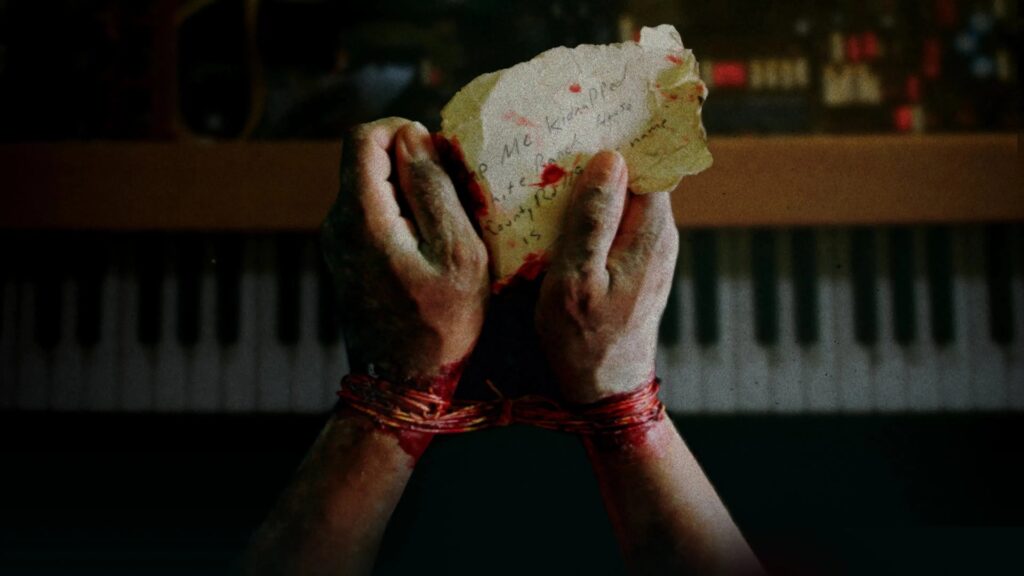 Dead Mail – DEAD MAIL is hard to categorize. It’s not really a horror movie as one might think, but rather a clever dark funny mystery / thriller taking place in a nondescript Midwestern town. Filmed to give a lo-fi 1980’s retro aesthetic, it comes off at first glance like a scary VHS one might find in the attic. Hats off to Filmmakers Kyle McConaghy and Joe DeBoer who achieved this look utilizing a digital-to-analog process to achieve this highly textured work of genius. The story is told using a unique, nonlinear narrative structure that works well. The film starts with a man Josh (Sterling Macer Jr.) bound and gagged, crawling out to shove a bloodied letter into a mailbox while his captor Trent (John Fleck) is in pursuit. It then shifts in time to postal workers Ann (Micki Jackson) and Bess (Susan Priver) finding Josh’s letter in their dead mail pile and wanting to investigate. They bring it to their boss Jasper(Tomas Boykin) who’s the head dead letter inspector. Jasper is so cool, clever and likable, one hopes a future series will be based on this guy. Interactions with his colleagues and secret cohort are surprising and amusing. On a human psyche level, the story connects Josh, Trent and Jasper in depicting the loneliness each one feels, for vastly different reasons. Production / costume design could not have been any better in replicating the 80’s era and Midwestern feel. Filmed in only 6 weeks, on an “ultra-low” budget, the filmmakers performed many tasks themselves, such as spray-painting the wallpaper in McConaghy’s own apartment bathroom for a scene. Many scenes were pieced together from multiple locations; for example, the main house in the film was created using six different locations, including two or three separate exteriors and four interiors. While mainly shot in LA the filmmakers do an excellent job in recreating the a nondescript Midwestern town where the story takes place. –jb Dead Mail – DEAD MAIL is hard to categorize. It’s not really a horror movie as one might think, but rather a clever dark funny mystery / thriller taking place in a nondescript Midwestern town. Filmed to give a lo-fi 1980’s retro aesthetic, it comes off at first glance like a scary VHS one might find in the attic. Hats off to Filmmakers Kyle McConaghy and Joe DeBoer who achieved this look utilizing a digital-to-analog process to achieve this highly textured work of genius. The story is told using a unique, nonlinear narrative structure that works well. The film starts with a man Josh (Sterling Macer Jr.) bound and gagged, crawling out to shove a bloodied letter into a mailbox while his captor Trent (John Fleck) is in pursuit. It then shifts in time to postal workers Ann (Micki Jackson) and Bess (Susan Priver) finding Josh’s letter in their dead mail pile and wanting to investigate. They bring it to their boss Jasper(Tomas Boykin) who’s the head dead letter inspector. Jasper is so cool, clever and likable, one hopes a future series will be based on this guy. Interactions with his colleagues and secret cohort are surprising and amusing. On a human psyche level, the story connects Josh, Trent and Jasper in depicting the loneliness each one feels, for vastly different reasons. Production / costume design could not have been any better in replicating the 80’s era and Midwestern feel. Filmed in only 6 weeks, on an “ultra-low” budget, the filmmakers performed many tasks themselves, such as spray-painting the wallpaper in McConaghy’s own apartment bathroom for a scene. Many scenes were pieced together from multiple locations; for example, the main house in the film was created using six different locations, including two or three separate exteriors and four interiors. While mainly shot in LA the filmmakers do an excellent job in recreating the a nondescript Midwestern town where the story takes place. –jb |
|
 Jazzy – Morissa Maltz’s Jazzy is a quietly radiant coming-of-age film that lingers long after it ends. With an intimate, documentary-like touch, Maltz captures the fragile, evolving friendship between two young girls navigating identity, belonging, and change. What makes Jazzy so special is its refusal to dramatize for effect; instead, it trusts small moments—glances, silences, and everyday rituals—to carry emotional weight. The performances feel achingly real, particularly lead actress Jasmine Bearkiller Shangreaux, blurring the line between fiction and lived experience. Maltz’s direction is tender and patient, allowing the natural world and the passage of time to shape the story as much as dialogue does. In an era of loud, plot-driven storytelling, Jazzy stands out for its authenticity and emotional honesty. –ChatGPT Jazzy – Morissa Maltz’s Jazzy is a quietly radiant coming-of-age film that lingers long after it ends. With an intimate, documentary-like touch, Maltz captures the fragile, evolving friendship between two young girls navigating identity, belonging, and change. What makes Jazzy so special is its refusal to dramatize for effect; instead, it trusts small moments—glances, silences, and everyday rituals—to carry emotional weight. The performances feel achingly real, particularly lead actress Jasmine Bearkiller Shangreaux, blurring the line between fiction and lived experience. Maltz’s direction is tender and patient, allowing the natural world and the passage of time to shape the story as much as dialogue does. In an era of loud, plot-driven storytelling, Jazzy stands out for its authenticity and emotional honesty. –ChatGPT |
|
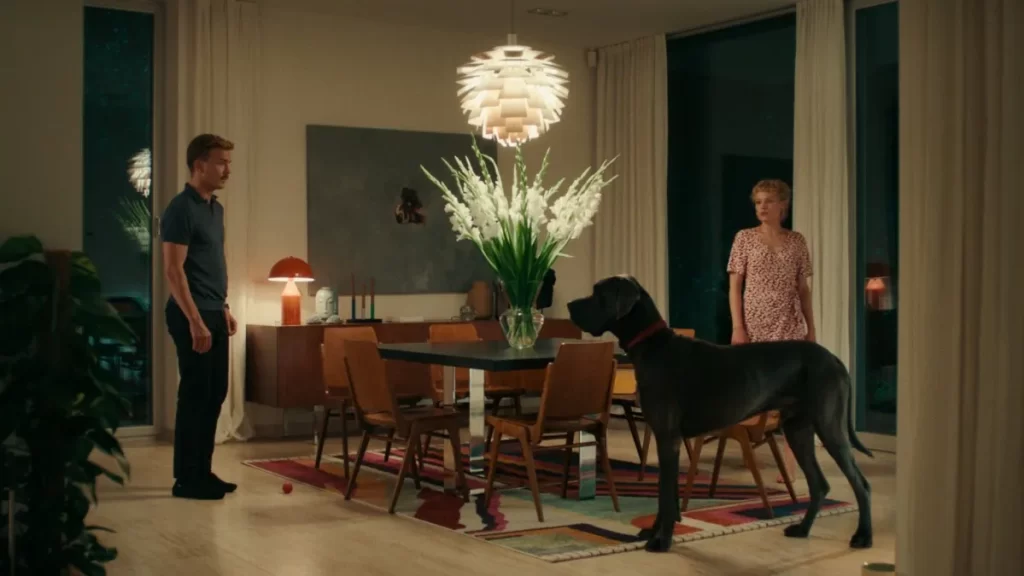 Peacock – Bernhard Wenger’s debut PEACOCK sits in the Buried Treasure category with production quality that feel anything but hidden. The film follows a man who rents himself out to perform roles (boyfriend, son, rehearsal partner, etc.) until the line between work and identity begins to dissolve. The humor sits comfortably in the dry Nordic absurdist lineage of Aki Kaurismäki and Roy Andersson, though its anxieties about authenticity and performance feel unmistakably of the moment. Wenger lets the premise spiral with confidence, combining strong production design with a great lead performance fully committed to the absurdity. Stylish, biting, and consistently funny, PEACOCK feels like exactly the kind of discovery this category was invented for. –cf Peacock – Bernhard Wenger’s debut PEACOCK sits in the Buried Treasure category with production quality that feel anything but hidden. The film follows a man who rents himself out to perform roles (boyfriend, son, rehearsal partner, etc.) until the line between work and identity begins to dissolve. The humor sits comfortably in the dry Nordic absurdist lineage of Aki Kaurismäki and Roy Andersson, though its anxieties about authenticity and performance feel unmistakably of the moment. Wenger lets the premise spiral with confidence, combining strong production design with a great lead performance fully committed to the absurdity. Stylish, biting, and consistently funny, PEACOCK feels like exactly the kind of discovery this category was invented for. –cf |
|
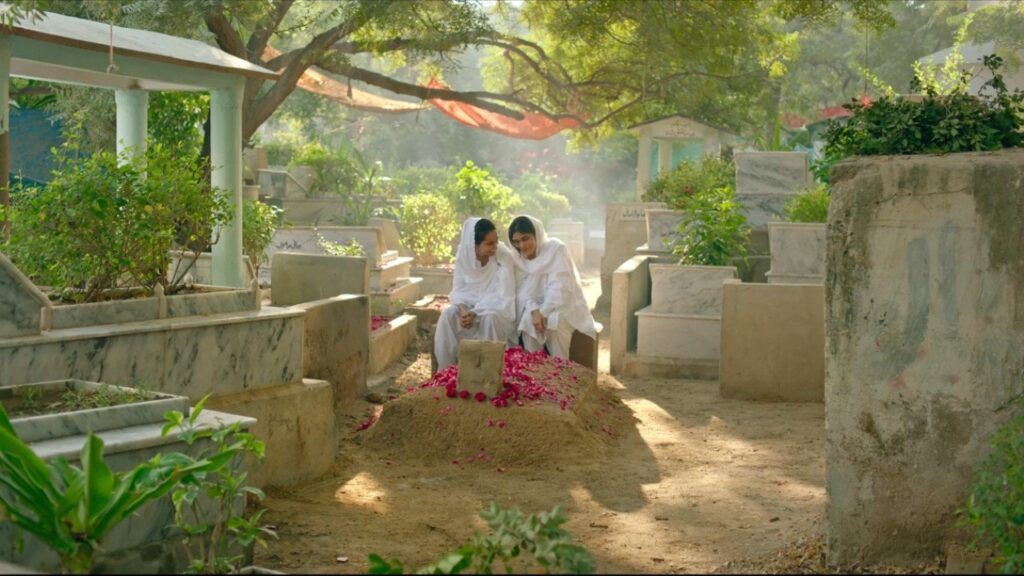 The Queen of My Dreams – Fawzia Mirza’s debut feature-length film that combines humor, longing, and cultural memory into something quite lovely. Through a daughter’s imaginative journey into her mother’s past, the film bridges generations with wit and tenderness, revealing how identity is shaped as much by fantasy as by history. Visually shifting between eras, tones, and emotions, the film feels both inventive and deeply personal, while its performances ground the story. What makes it truly special is its refusal to simplify: it embraces contradiction, diaspora, queerness, and familial love with equal nuance. At once intimate and expansive, it invites viewers to reconsider the stories we inherit and the ones we dare to rewrite. Overlooked on release, it lingers long after, a vibrant reminder that some of the most resonant cinematic treasures arrive without fanfare. –ChatGPT The Queen of My Dreams – Fawzia Mirza’s debut feature-length film that combines humor, longing, and cultural memory into something quite lovely. Through a daughter’s imaginative journey into her mother’s past, the film bridges generations with wit and tenderness, revealing how identity is shaped as much by fantasy as by history. Visually shifting between eras, tones, and emotions, the film feels both inventive and deeply personal, while its performances ground the story. What makes it truly special is its refusal to simplify: it embraces contradiction, diaspora, queerness, and familial love with equal nuance. At once intimate and expansive, it invites viewers to reconsider the stories we inherit and the ones we dare to rewrite. Overlooked on release, it lingers long after, a vibrant reminder that some of the most resonant cinematic treasures arrive without fanfare. –ChatGPT |
|
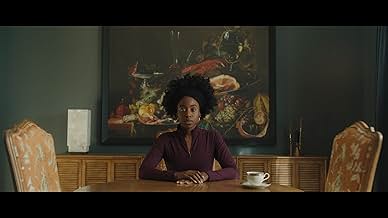 We Strangers – When Rayelle receives an out-of-the-blue invitation to become a housecleaner, she uses it to her advantage. “Ray” gets a kick–and extra funds–from playing on the privilege and racism of her employers, even though she has to put up with their microaggressions. Gradually, we see how much Ray chooses to subsume her true self. Even though the film has a comedic tone and a winning protagonist, every aspect of it highlights the separation that injures our society, and causes dreams to be pushed aside. –djy We Strangers – When Rayelle receives an out-of-the-blue invitation to become a housecleaner, she uses it to her advantage. “Ray” gets a kick–and extra funds–from playing on the privilege and racism of her employers, even though she has to put up with their microaggressions. Gradually, we see how much Ray chooses to subsume her true self. Even though the film has a comedic tone and a winning protagonist, every aspect of it highlights the separation that injures our society, and causes dreams to be pushed aside. –djy |
|
Best Director |
|
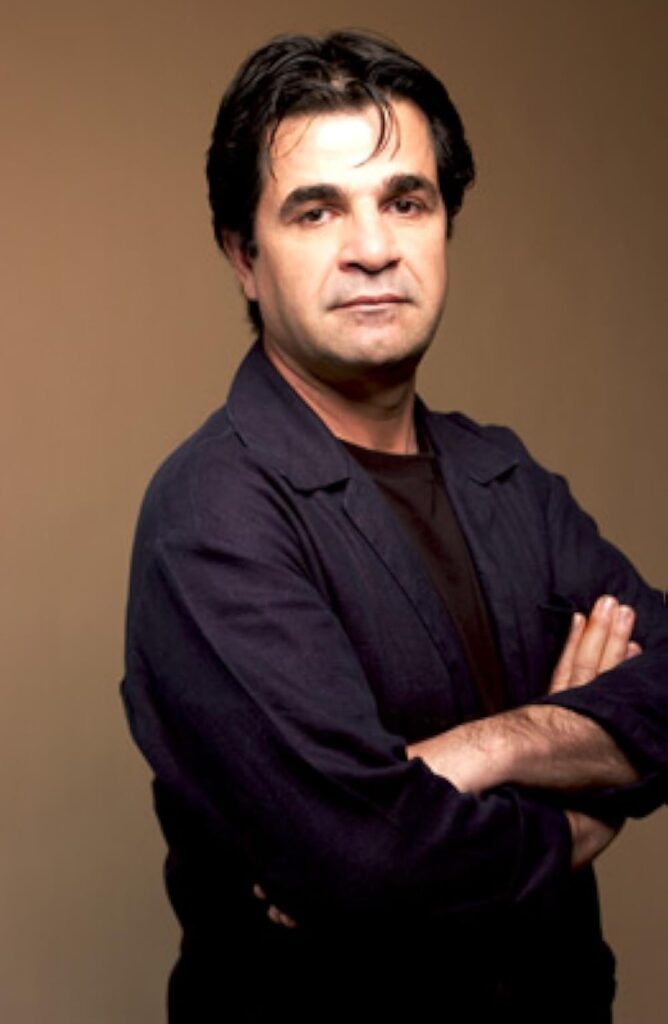 Jafar Panahi for It Was Just an Accident – Calling Jafar Panahi’s work on IT WAS JUST AN ACCIDENT “brave” feels inadequate. The personal courage required to keep making films under the circumstances he faces is something most of us will never have to test in ourselves. What’s remarkable is that the film never feels bitter or crushing. Instead, Panahi finds humor, warmth, and humanity at nearly every turn, balancing tonal shifts with remarkable ease. The screen stays alive through inventive blocking that keeps the ensemble constantly in motion, even echoing the choreography of classic slapstick. Few directors embody changemaking through art quite like Panahi, and this film is another reminder of why he remains one of the greats. –cf Jafar Panahi for It Was Just an Accident – Calling Jafar Panahi’s work on IT WAS JUST AN ACCIDENT “brave” feels inadequate. The personal courage required to keep making films under the circumstances he faces is something most of us will never have to test in ourselves. What’s remarkable is that the film never feels bitter or crushing. Instead, Panahi finds humor, warmth, and humanity at nearly every turn, balancing tonal shifts with remarkable ease. The screen stays alive through inventive blocking that keeps the ensemble constantly in motion, even echoing the choreography of classic slapstick. Few directors embody changemaking through art quite like Panahi, and this film is another reminder of why he remains one of the greats. –cf |
|
 Mary Bronstein for If I Had Legs I’d Kick You – Mary Bronstein does a fantastic job directing IF I HAD LEGS I’D KICK YOU. She also wrote the original screenplay. The story is about a mother, Linda,(played by Rose Byrne), whose world comes crashing around her while dealing with a daughter with a mysterious illness. Bronstein made the brilliant choice to present the daughter as a disembodied voice. The same choice was made for Linda’s husband who we only hear on the phone. Another clever choice was for Conan O’Brien (who played Linda’s therapist) to be exceedingly cold and unfeeling. Conan is someone the viewer expects will add levity or at least be an empathetic character. Bronstein directed him to be painfully cold. The viewer wishes more warmth and empathy from him, much like Linda desires. Bronstein ratchets up the tension and allows you to feel Linda’s pain through several devices, real, imagined and symbolic. One such means is that at night, when she needs a quick break, Linda is tethered to a crackling staticky baby monitor emitting the constant beeping of the machinery her daughter needs. These constant mechanical sounds are unnerving and pulls us into Linda’s world. The fact that Bronstein had a daughter with a similar illness and went through some similar events lends to the director’s ability to truly put the viewer in Linda’s place. By the end you’ll be on the edge of your seat, feeling very much what Linda feels thanks in large part due to Bronstein’s directorial choices, (in addition to Rose Byrne’s powerful and authentic performance). –jb Mary Bronstein for If I Had Legs I’d Kick You – Mary Bronstein does a fantastic job directing IF I HAD LEGS I’D KICK YOU. She also wrote the original screenplay. The story is about a mother, Linda,(played by Rose Byrne), whose world comes crashing around her while dealing with a daughter with a mysterious illness. Bronstein made the brilliant choice to present the daughter as a disembodied voice. The same choice was made for Linda’s husband who we only hear on the phone. Another clever choice was for Conan O’Brien (who played Linda’s therapist) to be exceedingly cold and unfeeling. Conan is someone the viewer expects will add levity or at least be an empathetic character. Bronstein directed him to be painfully cold. The viewer wishes more warmth and empathy from him, much like Linda desires. Bronstein ratchets up the tension and allows you to feel Linda’s pain through several devices, real, imagined and symbolic. One such means is that at night, when she needs a quick break, Linda is tethered to a crackling staticky baby monitor emitting the constant beeping of the machinery her daughter needs. These constant mechanical sounds are unnerving and pulls us into Linda’s world. The fact that Bronstein had a daughter with a similar illness and went through some similar events lends to the director’s ability to truly put the viewer in Linda’s place. By the end you’ll be on the edge of your seat, feeling very much what Linda feels thanks in large part due to Bronstein’s directorial choices, (in addition to Rose Byrne’s powerful and authentic performance). –jb |
|
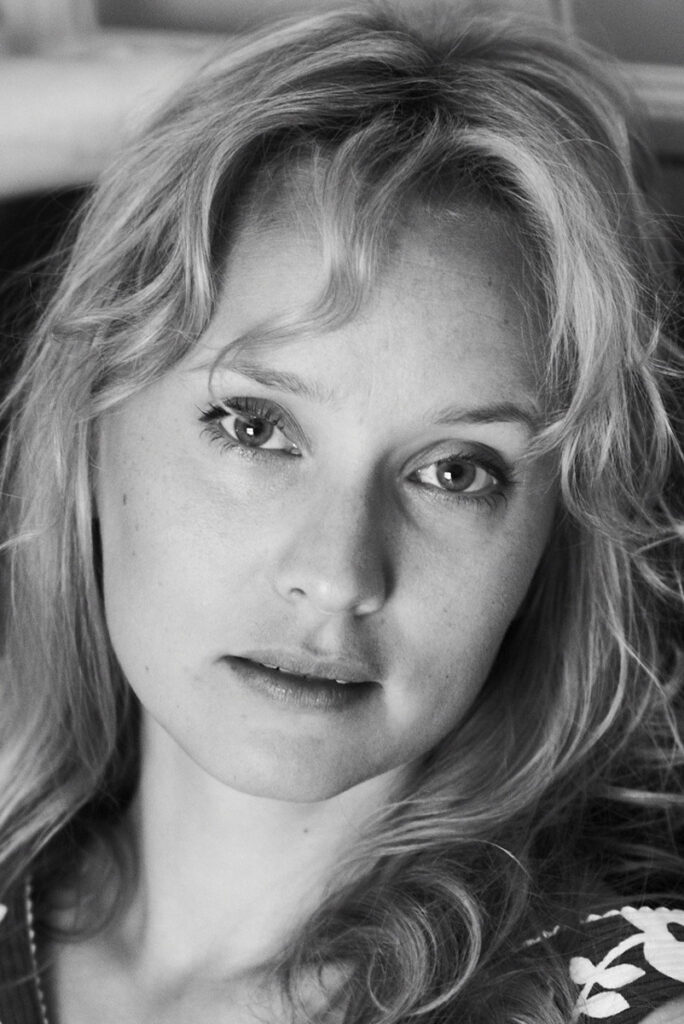 Mona Fastvold for The Testament of Annn Lee – In THE TESTAMENT OF ANN LEE, director Mona Fastvold transcends the traditional biopic to create a luminous love letter to cinema itself. Through bold visual language, she turns the story of Ann Lee into the film’s own kind of “Protestantism,” breaking with cinematic convention in ways that mirror her subject’s radical spirit. Fastvold’s outside-the-box approach transforms history into living art, using form as doctrine and style as revelation. The result is a film that feels both reverent and revolutionary. –br Mona Fastvold for The Testament of Annn Lee – In THE TESTAMENT OF ANN LEE, director Mona Fastvold transcends the traditional biopic to create a luminous love letter to cinema itself. Through bold visual language, she turns the story of Ann Lee into the film’s own kind of “Protestantism,” breaking with cinematic convention in ways that mirror her subject’s radical spirit. Fastvold’s outside-the-box approach transforms history into living art, using form as doctrine and style as revelation. The result is a film that feels both reverent and revolutionary. –br |
|
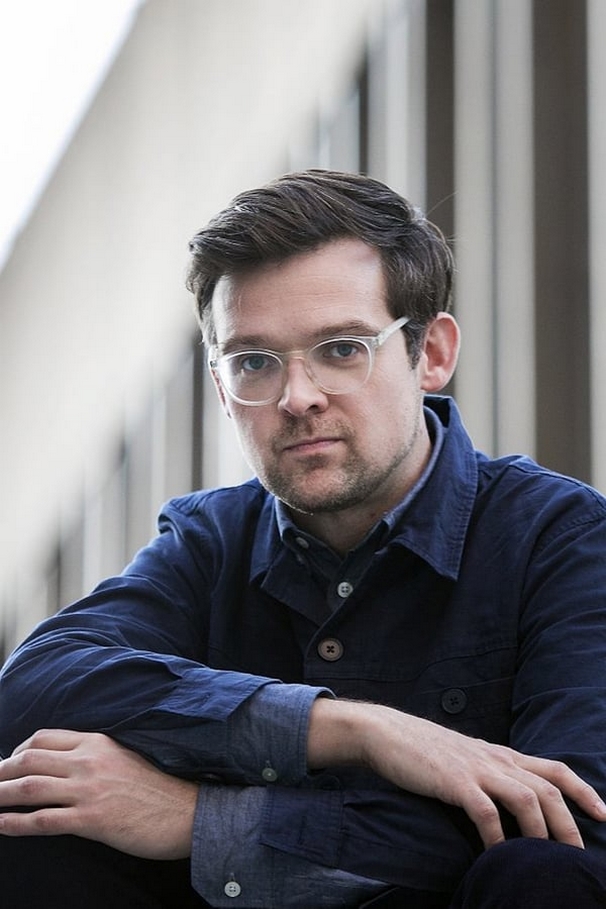 Matthew Rankin for Universal Language – “What if Canada and in particular, that unloved inland metropolis of Winnipeg was colonized by Iran?” is the jumping-off point for writer/director/actor Rankin’s second feature, a considerable advance over his first, THE TWENTIETH CENTURY (2021 Chlotrudis nominee for Production Design and Editing) while barely resembling it. A deadpan mashup of quirks learned from both Iranian cinema (Abbas Kiarostami in particular) and fellow Winnipegian Guy Maddin, it manages to be hilarious and unique but also unexpectedly moving, creating an outrageous mirror world from scratch and unspooling a narrative that concludes with the wisdom and epiphany of, well, a Kiarostami film. — ck Matthew Rankin for Universal Language – “What if Canada and in particular, that unloved inland metropolis of Winnipeg was colonized by Iran?” is the jumping-off point for writer/director/actor Rankin’s second feature, a considerable advance over his first, THE TWENTIETH CENTURY (2021 Chlotrudis nominee for Production Design and Editing) while barely resembling it. A deadpan mashup of quirks learned from both Iranian cinema (Abbas Kiarostami in particular) and fellow Winnipegian Guy Maddin, it manages to be hilarious and unique but also unexpectedly moving, creating an outrageous mirror world from scratch and unspooling a narrative that concludes with the wisdom and epiphany of, well, a Kiarostami film. — ck |
|
 Kelly Reichardt for The Mastermind – You can’t call The Mastermind an art heist film, although it is very much that, unless you qualify it as a Kelly Reichardt art-heist film. Reichardt is less interested in the thrills and suspense of an art-heist, as she is in the psychology of the man behind the crime. Even more, Reichardt paints the portrait of life in 1970 with protests against the Viet Nam Was and other political challenges percolating in the background throughout the film. The director paints crafts a funny and sad portrait of what straight, cis, white male privilege looks like, all while Josh O’Connor’s protagnist, James Mooney moves through life, and across the country oblivious to the larger world around him, from his wife and family, to the political strife that appears in the background through the film. The film is leisurely paced, yet hits hard when making a point Reichardt coaxes an oblivious, nearly tragic performance from O’Connor and recreates an accurate 1970’s Framingham, MA even though it was shot in Ohio. –mrc Kelly Reichardt for The Mastermind – You can’t call The Mastermind an art heist film, although it is very much that, unless you qualify it as a Kelly Reichardt art-heist film. Reichardt is less interested in the thrills and suspense of an art-heist, as she is in the psychology of the man behind the crime. Even more, Reichardt paints the portrait of life in 1970 with protests against the Viet Nam Was and other political challenges percolating in the background throughout the film. The director paints crafts a funny and sad portrait of what straight, cis, white male privilege looks like, all while Josh O’Connor’s protagnist, James Mooney moves through life, and across the country oblivious to the larger world around him, from his wife and family, to the political strife that appears in the background through the film. The film is leisurely paced, yet hits hard when making a point Reichardt coaxes an oblivious, nearly tragic performance from O’Connor and recreates an accurate 1970’s Framingham, MA even though it was shot in Ohio. –mrc |
|
| n | |
 Joachim Trier for Sentimental Value – Joachim Trier for Sentimental Value – |
|
Best Performance in a Lead Role
|
|
 Rose Byrne for the role of Linda in If I Had Legs I’d Kick You – Rose Byrne delivers perhaps the rawest performance of the year in IF I HAD LEGS I’D KICK YOU, guiding us through every emotional swing of a mother stretched well past her limits. Byrne captures confusion, frustration, fear, love, and fleeting relief with such immediacy that you’re locked in to her every moment on screen. In a year filled with films about the struggles of motherhood, this may be the most unflinching portrait of someone genuinely trying her best despite endless obstacles and inevitable mistakes. Byrne never asks for sympathy; she simply lets Linda exist in all her contradictions. It’s fearless, exhausting, and deeply human work. –cf Rose Byrne for the role of Linda in If I Had Legs I’d Kick You – Rose Byrne delivers perhaps the rawest performance of the year in IF I HAD LEGS I’D KICK YOU, guiding us through every emotional swing of a mother stretched well past her limits. Byrne captures confusion, frustration, fear, love, and fleeting relief with such immediacy that you’re locked in to her every moment on screen. In a year filled with films about the struggles of motherhood, this may be the most unflinching portrait of someone genuinely trying her best despite endless obstacles and inevitable mistakes. Byrne never asks for sympathy; she simply lets Linda exist in all her contradictions. It’s fearless, exhausting, and deeply human work. –cf |
|
 Tom Blyth for the role of Lucas in Plainclothes – Probably best known for his role in The Hunger Games: The Ballad of Songbirds & Snakes, Tom Blyth surprises everyone by his tortured, nuanced performance as Lucas, a police officer working undercover in the mid-90’s, Syracuse shopping mall, meeting up with men in the restroom with the promise of sex, only to have them arrested for indecent exposure. Lucas is tortured because he is learning that he is gay, and when he encounter a potential victim of his operation with whom he finds himself intensely attracted, his anxiety and guilt skyrtocket, bleeding into all aspects of his life, even as he tries to pursue a relationship with the equally complex Andrew. The sincerity with which Blyth portrays Lucas is both moving and tension-building, as he tries to manage his secret at a New Year’s party at his mom’s where he worries he is on the verge of being discovered. Also beautifully acted is the intense desire and discovery of that first sexual encounter that wraps up his stunted emotional core and drives him to potentially devastating decisions. It’s a bravura performance for its intensity, yet haunting for it’s quiet internality. –mrc Tom Blyth for the role of Lucas in Plainclothes – Probably best known for his role in The Hunger Games: The Ballad of Songbirds & Snakes, Tom Blyth surprises everyone by his tortured, nuanced performance as Lucas, a police officer working undercover in the mid-90’s, Syracuse shopping mall, meeting up with men in the restroom with the promise of sex, only to have them arrested for indecent exposure. Lucas is tortured because he is learning that he is gay, and when he encounter a potential victim of his operation with whom he finds himself intensely attracted, his anxiety and guilt skyrtocket, bleeding into all aspects of his life, even as he tries to pursue a relationship with the equally complex Andrew. The sincerity with which Blyth portrays Lucas is both moving and tension-building, as he tries to manage his secret at a New Year’s party at his mom’s where he worries he is on the verge of being discovered. Also beautifully acted is the intense desire and discovery of that first sexual encounter that wraps up his stunted emotional core and drives him to potentially devastating decisions. It’s a bravura performance for its intensity, yet haunting for it’s quiet internality. –mrc |
|
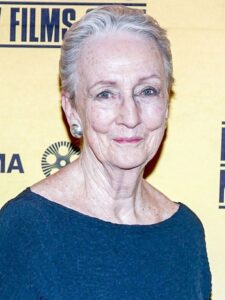 Kathleen Chalfant for the role of Ruth in Familliar Touch – FAMILIAR TOUCH’s Kathleen Chalfant delivers a performance of extraordinary grace, illuminating a heavy subject with warmth, dignity, and quiet strength. Through even the smallest gestures, she delivers a yearning for freedom that feels both fragile and fierce at the same time amid overwhelming sets of environmental and mental constraints. Chalfant transforms the entirety of the role into an emotional imprint of resilience and humanity. –br Kathleen Chalfant for the role of Ruth in Familliar Touch – FAMILIAR TOUCH’s Kathleen Chalfant delivers a performance of extraordinary grace, illuminating a heavy subject with warmth, dignity, and quiet strength. Through even the smallest gestures, she delivers a yearning for freedom that feels both fragile and fierce at the same time amid overwhelming sets of environmental and mental constraints. Chalfant transforms the entirety of the role into an emotional imprint of resilience and humanity. –br |
|
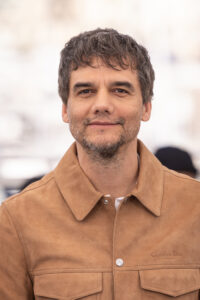 Wagner Moura for the role of Marcelo Alves / Armando Solimões / Fernando Solimões in The Secret Agent – Wagner Moura’s portrayal of Armando in THE SECRET AGENT is a performance defined by tension and control. The subtlety on display as the actor walks a thin line between hunted vulnerability and disciplined restraint is masterfully conveyed. Reading unspoken inner dialogue that denotes being always calculated and always surviving is a testament to the subtle physicality Moura wields in this film. –br Wagner Moura for the role of Marcelo Alves / Armando Solimões / Fernando Solimões in The Secret Agent – Wagner Moura’s portrayal of Armando in THE SECRET AGENT is a performance defined by tension and control. The subtlety on display as the actor walks a thin line between hunted vulnerability and disciplined restraint is masterfully conveyed. Reading unspoken inner dialogue that denotes being always calculated and always surviving is a testament to the subtle physicality Moura wields in this film. –br |
|
 Fernanda Torres for the role of Fernanda Torres for the role of |
|
Best Performance in a Supporting Role |
|
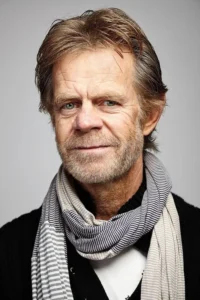 William H. Macy for the role of Arn Peeples in Train Dreams – William Macy, now 76, may have played his best role ever this year, as Arn Peeples in TRAIN DREAMS. Though his screen time is relatively short, his impact on the protagonist Robert and the audience is huge. Arn, an explosives expert with white whiskers and a corn cob pipe, is the philosopher and a sounding board for Robert’s questions about logging and life. Arn’s gentle cogitations bring us deeper into the movie’s themes of a world changing too fast, and the brutal impact that harming nature has a on a man’s soul. –djy William H. Macy for the role of Arn Peeples in Train Dreams – William Macy, now 76, may have played his best role ever this year, as Arn Peeples in TRAIN DREAMS. Though his screen time is relatively short, his impact on the protagonist Robert and the audience is huge. Arn, an explosives expert with white whiskers and a corn cob pipe, is the philosopher and a sounding board for Robert’s questions about logging and life. Arn’s gentle cogitations bring us deeper into the movie’s themes of a world changing too fast, and the brutal impact that harming nature has a on a man’s soul. –djy |
|
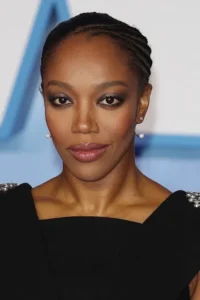 Naomi Ackie for the role of Lydie in Sorry, Baby – Naomi Ackie is the key piece of the formula for the chemistry between two long-time friends, one of whom is experiencing trauma while Ackie’s Lydie character provides an emotionally layered support system. Her ability to portray humor and quiet resilience at the same time to the heavy emotional weight of the circumstances of the film stands out as to the importance of this character. The person-to-person rhythm between the two performers stands out because of Ackie’s ability to anchor the interactions. What Ackie says as Lydie is sometimes even secondary to the glances and stares of affirmation, approval, and even disapproval that she provides which all communicate exactly what her friend needs to hear, even when she’s not saying anything. –br Naomi Ackie for the role of Lydie in Sorry, Baby – Naomi Ackie is the key piece of the formula for the chemistry between two long-time friends, one of whom is experiencing trauma while Ackie’s Lydie character provides an emotionally layered support system. Her ability to portray humor and quiet resilience at the same time to the heavy emotional weight of the circumstances of the film stands out as to the importance of this character. The person-to-person rhythm between the two performers stands out because of Ackie’s ability to anchor the interactions. What Ackie says as Lydie is sometimes even secondary to the glances and stares of affirmation, approval, and even disapproval that she provides which all communicate exactly what her friend needs to hear, even when she’s not saying anything. –br |
|
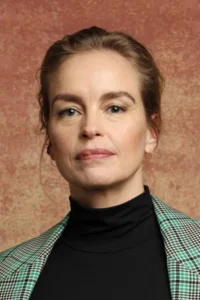 Nina Hoss for the role of Eileen Lovborg in Hedda – German actress Nina Hoss dominates almost every scene in which she appears in Nia DaCosta’s HEDDA, playing Eileen Lovborg, the gender-flipped love-interest in this adaptation of Hedda Gabler. Hoss brings a calculated mixture of both brazen confidence, in her knowledge she that is the smartest person in every room, and shattering insecurity, especially when she dramatically tumbles off the wagon. Yet even at her drunken worst, in a set-up meant to destroy her self-esteem, she manages to enthrall and outthink every man in the room. Her bold, bravura presence is a great match for her leading lady, played to perfection by Tessa Thompson. The pair of actors tear up the screen making HEDDA a gorgeous, bombastic spectacle you can’t tear your eyes away from. –mrc Nina Hoss for the role of Eileen Lovborg in Hedda – German actress Nina Hoss dominates almost every scene in which she appears in Nia DaCosta’s HEDDA, playing Eileen Lovborg, the gender-flipped love-interest in this adaptation of Hedda Gabler. Hoss brings a calculated mixture of both brazen confidence, in her knowledge she that is the smartest person in every room, and shattering insecurity, especially when she dramatically tumbles off the wagon. Yet even at her drunken worst, in a set-up meant to destroy her self-esteem, she manages to enthrall and outthink every man in the room. Her bold, bravura presence is a great match for her leading lady, played to perfection by Tessa Thompson. The pair of actors tear up the screen making HEDDA a gorgeous, bombastic spectacle you can’t tear your eyes away from. –mrc |
|
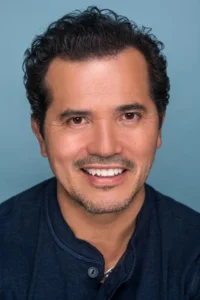 John Leguizamo for the role of Bob Trevino in Bob Trevino Likes It – A 30+ year veteran of stage and screen, John Leguizamo’s dependable presence proves a perfect fit for the titular character—or at least one of them as multiple Bob Trevinos figure into this tale of a young woman finding a surrogate father in a stranger who shares her own problematic father’s name. Leguizamo steps into the role of the former with such ease while also appearing fully aware of both the weirdness and potential the situation presents. The desire to connect and support each other emerges as one both this Trevino and Leguizamo seem to totally understand. –ck John Leguizamo for the role of Bob Trevino in Bob Trevino Likes It – A 30+ year veteran of stage and screen, John Leguizamo’s dependable presence proves a perfect fit for the titular character—or at least one of them as multiple Bob Trevinos figure into this tale of a young woman finding a surrogate father in a stranger who shares her own problematic father’s name. Leguizamo steps into the role of the former with such ease while also appearing fully aware of both the weirdness and potential the situation presents. The desire to connect and support each other emerges as one both this Trevino and Leguizamo seem to totally understand. –ck |
|
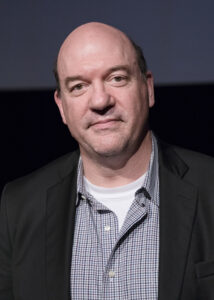 John Carroll Lynch for the role of Pete in Sorry, Baby – The ability to radiate both empathy and quiet wisdom is a quality that makes John Carroll Lynch stand out in SORRY, BABY. With this performance comes a gentle presence that is warm and genuine, but it is also a presence that commands respect for having traveled his own road that has been worn through time. His measured deliveries leave a lasting impression, both for the audience and as evidenced in the characterization of his interactions with a fellow performer who seems to find at least partial consolation in his warmth, or at least the feeling of being seen. He conveys compassion as much in the things he leaves unsaid as he does with his actual verbal offerings. –br John Carroll Lynch for the role of Pete in Sorry, Baby – The ability to radiate both empathy and quiet wisdom is a quality that makes John Carroll Lynch stand out in SORRY, BABY. With this performance comes a gentle presence that is warm and genuine, but it is also a presence that commands respect for having traveled his own road that has been worn through time. His measured deliveries leave a lasting impression, both for the audience and as evidenced in the characterization of his interactions with a fellow performer who seems to find at least partial consolation in his warmth, or at least the feeling of being seen. He conveys compassion as much in the things he leaves unsaid as he does with his actual verbal offerings. –br |
|
Best Breakout Performance |
|
 Everett Blunck for the role of Griffin in Griffin in Summer and Ben in The Plague – Blunck is the tween of the year, stealing our hearts in his two films. As GRIFFIN, he plays precocious and imperious 14-year-old aspiring playwright who falls, unexpectedly and deeply, for the neighbor hunk/aspiring performance artist. In this suburban queer coming-of-age film, Blunck plays the role sincerely and without mockery. As Ben in THE PLAGUE, he’s a sensitive 12-year-old negotiating the social strata of a boy’s camp. In a role that relies on vulnerable physicality, Blunck transforms from a sunny people-pleaser to the victim of toxic codes–an amazing performance. –djy Everett Blunck for the role of Griffin in Griffin in Summer and Ben in The Plague – Blunck is the tween of the year, stealing our hearts in his two films. As GRIFFIN, he plays precocious and imperious 14-year-old aspiring playwright who falls, unexpectedly and deeply, for the neighbor hunk/aspiring performance artist. In this suburban queer coming-of-age film, Blunck plays the role sincerely and without mockery. As Ben in THE PLAGUE, he’s a sensitive 12-year-old negotiating the social strata of a boy’s camp. In a role that relies on vulnerable physicality, Blunck transforms from a sunny people-pleaser to the victim of toxic codes–an amazing performance. –djy |
|
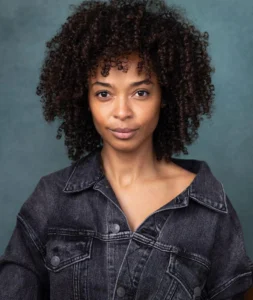 Susan Chardy for the role of Shula in On Becoming a Guinea Fowl – Susan Chardy for the role of Shula in On Becoming a Guinea Fowl – |
|
Abou Sangare for the role of Souleymane Sangaré in Souleymane’s Story  – It’s hard to believe that this is Abou Sangare’s debut film as he manages to embody the character of Souleymane so well. Souleymane works so hard to do his job well, be kind to those around him. work long hours to make some money as a bicycle courier, and still make all his appointments as he prepares to appear before those who can grant him asylum in France. Perhaps it’s because Souleymane’s Story is also an adapted retelling of Abou’s personal story. Regardless, the camera loves him, and his face tells the story in ways that are honest and moving. –mrc – It’s hard to believe that this is Abou Sangare’s debut film as he manages to embody the character of Souleymane so well. Souleymane works so hard to do his job well, be kind to those around him. work long hours to make some money as a bicycle courier, and still make all his appointments as he prepares to appear before those who can grant him asylum in France. Perhaps it’s because Souleymane’s Story is also an adapted retelling of Abou’s personal story. Regardless, the camera loves him, and his face tells the story in ways that are honest and moving. –mrc |
|
 Jasmine Bearkiller Shangreaux for the role of Jazzy in Jazzy – A vibrant personality that draws the audience in is the foundation for Jasmine Bearkiller Shangreaux’s breakthrough performance in JAZZY. With a magnetic charm and emotional honesty, Shangreaux lays bare the visible struggles and uncertainties of adolescence with undeniable authenticity. Fidgeting about inside of a disarming naturalist setting, she captures the turbulence of growing up in moments that feel both intimate and universal. The result is a performance that is a captivating portrait of youth in transition, filled with heart and a genuine presence. –br Jasmine Bearkiller Shangreaux for the role of Jazzy in Jazzy – A vibrant personality that draws the audience in is the foundation for Jasmine Bearkiller Shangreaux’s breakthrough performance in JAZZY. With a magnetic charm and emotional honesty, Shangreaux lays bare the visible struggles and uncertainties of adolescence with undeniable authenticity. Fidgeting about inside of a disarming naturalist setting, she captures the turbulence of growing up in moments that feel both intimate and universal. The result is a performance that is a captivating portrait of youth in transition, filled with heart and a genuine presence. –br |
|
 Nina Ye for the role of I-Jing in Left-Handed Girl – Nina Ye for the role of I-Jing in Left-Handed Girl – |
|
 Tabatha Zimiga for the role of Tabatha Zimiga in East of Wall – Whether it’s instinctual talent, or just a natural affinity for conveying complex emotions with a look, Tabatha Zimiga’s debut performance, playing a slightly fictionalized version of herself, packs a dramatic wallop. For such a powerful character, Tabatha is surprisingly inwardly focused, keeping most of her emotions bottled up, yet playing with clarity over her face, beautifully shot by cinematographer Austin Shelton. It’s a tough role, even for someone who lived it, to capture the nuance, and administer restraint when histrionics would be so tempting. Zimiga captivates from her very first scene, and she doesn’t let up for the entire film. Talk about a brave performance, and a deft one as well. –mrc Tabatha Zimiga for the role of Tabatha Zimiga in East of Wall – Whether it’s instinctual talent, or just a natural affinity for conveying complex emotions with a look, Tabatha Zimiga’s debut performance, playing a slightly fictionalized version of herself, packs a dramatic wallop. For such a powerful character, Tabatha is surprisingly inwardly focused, keeping most of her emotions bottled up, yet playing with clarity over her face, beautifully shot by cinematographer Austin Shelton. It’s a tough role, even for someone who lived it, to capture the nuance, and administer restraint when histrionics would be so tempting. Zimiga captivates from her very first scene, and she doesn’t let up for the entire film. Talk about a brave performance, and a deft one as well. –mrc |
|
Best Performance by an Ensemble Cast |
|
It’s a Three-Way Tie! |
|
 It Was Just an Accident – A loose group of former political prisoners–a laborer, a photographer, a bride and groom–try to confirm the identify of their former tormentor, now their captive, and argue about whether to kill him or let him go. Thrown together in the close quarters of a van, or out in the desert, they represent the ways, moral and psychological, people choose to release themselves from trauma. Through a mix of professional and uncanny amateur actors, ACCIDENT is not just a thriller, but surprisingly funny. –djy It Was Just an Accident – A loose group of former political prisoners–a laborer, a photographer, a bride and groom–try to confirm the identify of their former tormentor, now their captive, and argue about whether to kill him or let him go. Thrown together in the close quarters of a van, or out in the desert, they represent the ways, moral and psychological, people choose to release themselves from trauma. Through a mix of professional and uncanny amateur actors, ACCIDENT is not just a thriller, but surprisingly funny. –djy |
|
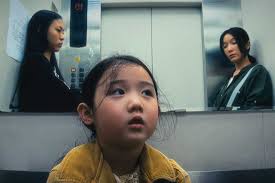 Left-Handed Girl – The girl of the title is I-Jing (Nina Ye), the 9-year-old, younger daughter of Shu-Fen (Janel Tsai), a struggling single mother who runs a noodle café in Taipei’s bustling night market strip. The “affliction” of the title is seen as the devil’s work by I-Jing’s grandfather, who continually points out her abnormality and forces her to eat and draw with her right hand. I-Jing’s older sister, I-Ann (Shih-Yuan Ma), lanky, lean and surly beyond all belief, works in a nearby market where her deliveries of betel nut packages to the sleazy men curbside requires a degree of sashay and flirtation. Her boss encourages skimpier outfits, and the two pass the late-night lull with quick, indiscreet carnal encounters – often with the door open and the noise of the street flowing in. Side plots have Shu-Fen’s mother involved in an illegal passport pipeline to America and the noodle shop landlord ever lurking and ready to evict. What begins as cheery and bright shifts and darkens in sly, unpredictable ways. The three leads convey a palpably deep and sometimes contentious sense of sisterhood, and Ye and Ma are exceptional in their roles. –tm Left-Handed Girl – The girl of the title is I-Jing (Nina Ye), the 9-year-old, younger daughter of Shu-Fen (Janel Tsai), a struggling single mother who runs a noodle café in Taipei’s bustling night market strip. The “affliction” of the title is seen as the devil’s work by I-Jing’s grandfather, who continually points out her abnormality and forces her to eat and draw with her right hand. I-Jing’s older sister, I-Ann (Shih-Yuan Ma), lanky, lean and surly beyond all belief, works in a nearby market where her deliveries of betel nut packages to the sleazy men curbside requires a degree of sashay and flirtation. Her boss encourages skimpier outfits, and the two pass the late-night lull with quick, indiscreet carnal encounters – often with the door open and the noise of the street flowing in. Side plots have Shu-Fen’s mother involved in an illegal passport pipeline to America and the noodle shop landlord ever lurking and ready to evict. What begins as cheery and bright shifts and darkens in sly, unpredictable ways. The three leads convey a palpably deep and sometimes contentious sense of sisterhood, and Ye and Ma are exceptional in their roles. –tm |
|
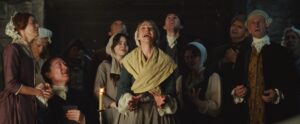 The Testament of Ann Lee – Mona Fastvold’s ambitious, seamlessly-executed musical biopic about the founding of the Shakers is memorable not only for its sensitive writing, glorious music and choreography, brilliant production design, and beautiful cinematography: it also has an unforgettably powerful cast. Amanda Seyfried, despite not receiving much award recognition (but then this is true of this film i general, which is baffling), is stunning as Ann lee, playing the visionary firebrand from her teenage years until her death at the age of 48. Her singing and dancing are as impressive as the emotional power of her acting. Lewis Pullman is very fine as her brother William, her constant companion and helpmeet. Thomasin McKenzie doesn’t have many lines in the film itself but is a consistent quiet presence, and her mesmerizing voiceover gives the film a haunting, earthy tone. Christopher Abbott is Ann’s rather selfish husband, and a bit of a sociopath, as has been seen in some of his other screen roles (The World to Come, Possessor). Every single role feels authentic and focused, a tribute to this powerful material and the film’s bold directorial vision. The smaller roles played by locals and extras lend strong color and energy to this awe-inspiring film, which was my absolute favorite of 2025. –pa The Testament of Ann Lee – Mona Fastvold’s ambitious, seamlessly-executed musical biopic about the founding of the Shakers is memorable not only for its sensitive writing, glorious music and choreography, brilliant production design, and beautiful cinematography: it also has an unforgettably powerful cast. Amanda Seyfried, despite not receiving much award recognition (but then this is true of this film i general, which is baffling), is stunning as Ann lee, playing the visionary firebrand from her teenage years until her death at the age of 48. Her singing and dancing are as impressive as the emotional power of her acting. Lewis Pullman is very fine as her brother William, her constant companion and helpmeet. Thomasin McKenzie doesn’t have many lines in the film itself but is a consistent quiet presence, and her mesmerizing voiceover gives the film a haunting, earthy tone. Christopher Abbott is Ann’s rather selfish husband, and a bit of a sociopath, as has been seen in some of his other screen roles (The World to Come, Possessor). Every single role feels authentic and focused, a tribute to this powerful material and the film’s bold directorial vision. The smaller roles played by locals and extras lend strong color and energy to this awe-inspiring film, which was my absolute favorite of 2025. –pa |
|
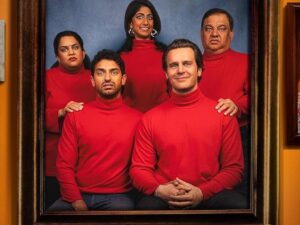 A Nice Indian Boy – Roshan Sethi’s twist on the romantic comedy would not work without the precise casting of its leads: Karan Soni as a neurotic Indian-American doctor looking to bring the film’s titular conceit home to meet his family and Jonathan Groff, the white man he ends up falling for. However, the rest of the cast, from members of Soni’s immediate family (father Harish Patel, mother Zarna Garg, older sister Sunita Mani) to his co-worker Paul (Peter S. Kim) are all deeply drawn and lovingly portrayed, coming off as multi-dimensional and lived-in—a strong ensemble in what proves to be a very nice movie. –ck A Nice Indian Boy – Roshan Sethi’s twist on the romantic comedy would not work without the precise casting of its leads: Karan Soni as a neurotic Indian-American doctor looking to bring the film’s titular conceit home to meet his family and Jonathan Groff, the white man he ends up falling for. However, the rest of the cast, from members of Soni’s immediate family (father Harish Patel, mother Zarna Garg, older sister Sunita Mani) to his co-worker Paul (Peter S. Kim) are all deeply drawn and lovingly portrayed, coming off as multi-dimensional and lived-in—a strong ensemble in what proves to be a very nice movie. –ck |
|
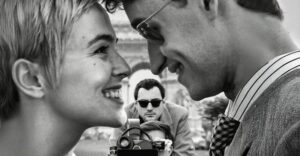 Nouvelle Vague – Nouvelle Vague – |
|
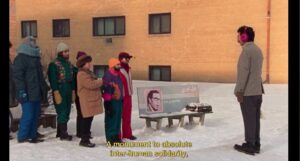 Universal Language – Universal Language – |
|
Best Original Screenplay |
|
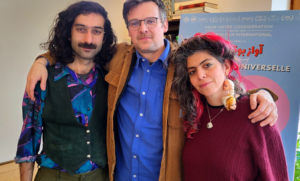 Universal Language, screenplay by Ila Firouzabadi, Pirouz Nemati, Matthew Rankin – You cant get much more original than Univeresal Language. Remagine the city of Winnipeg where all the residents speak Farsi are are rooted in a middle eastern culture. Tim Horton’s are dark, stylish tea rooms, and school children are berated by their teacher for their stupidity. Add to that a powerful story of identity and a man’s journey to go back to his roots and reunite with his mother, only to find that another man has literally taken his place. Somehow, through the absurdist dark humor, Firouzabadi, Nemati, and Rankin create a powerfully affecting story that explores race, culture, and identity. –mrc Universal Language, screenplay by Ila Firouzabadi, Pirouz Nemati, Matthew Rankin – You cant get much more original than Univeresal Language. Remagine the city of Winnipeg where all the residents speak Farsi are are rooted in a middle eastern culture. Tim Horton’s are dark, stylish tea rooms, and school children are berated by their teacher for their stupidity. Add to that a powerful story of identity and a man’s journey to go back to his roots and reunite with his mother, only to find that another man has literally taken his place. Somehow, through the absurdist dark humor, Firouzabadi, Nemati, and Rankin create a powerfully affecting story that explores race, culture, and identity. –mrc |
|
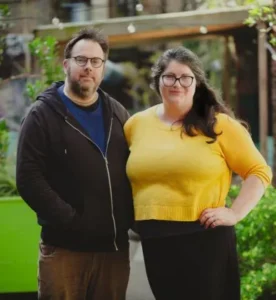 The Assessment, screenplay by Nell Garfath Cox, Dave Thomas, and John Donnelly – The best science fiction stories blend intriguing concepts, often rooted in the future (near or far) involving the evolving role of science in our lives, and personal stories focused on individuals and how these changing concepts impact them. In an earthbound future where the environment has grown fairly inhospitable and requires careful controls in order for people to function, the population is carefully controlled by the required assessment that prospective parents need to endure and receive approval. The assessment involves an approved assessor spending one week with the couple putting them through a series of bizarre and grueling tests, some stretching the limits of credulity. That Cox, Thomas, and Donnelly succeed in convincing us through the script that these assessments are indeed necessary, and then adding emotional twists to the storyline, makes for a very exciting, and humanist film. Bolstered by amazing performances, THE ASSESSMENT soars with its incredible screenplay. –mrc The Assessment, screenplay by Nell Garfath Cox, Dave Thomas, and John Donnelly – The best science fiction stories blend intriguing concepts, often rooted in the future (near or far) involving the evolving role of science in our lives, and personal stories focused on individuals and how these changing concepts impact them. In an earthbound future where the environment has grown fairly inhospitable and requires careful controls in order for people to function, the population is carefully controlled by the required assessment that prospective parents need to endure and receive approval. The assessment involves an approved assessor spending one week with the couple putting them through a series of bizarre and grueling tests, some stretching the limits of credulity. That Cox, Thomas, and Donnelly succeed in convincing us through the script that these assessments are indeed necessary, and then adding emotional twists to the storyline, makes for a very exciting, and humanist film. Bolstered by amazing performances, THE ASSESSMENT soars with its incredible screenplay. –mrc |
|
 Next Sohee, screenplay by July Jung – Next Sohee, screenplay by July Jung – |
|
 Sorry. Baby, screenplay by Eva Victor – Sorry. Baby, screenplay by Eva Victor – |
|
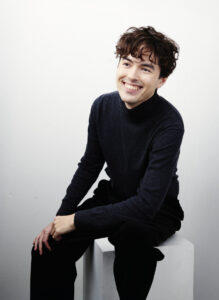 Twinless, screenplay by James Sweeney – James Sweeney’s latest feature vindicates the promise of his debut, STRAIGHT UP, taking a fairly outlandish premise (two men transgressively bond over a shared relationship with one man’s recently deceased twin) and making a meal out of it. Dylan O’Brien and Aisling Franciosi are both great (especially the former in a dual role) but it’s director/screenwriter/co-star Sweeney’s unique voice—caustic and catty, but deceptively vulnerable in how it considers the defenses one puts up in any kind of relationship that powers this messy, yearning, accomplished character study. –ck Twinless, screenplay by James Sweeney – James Sweeney’s latest feature vindicates the promise of his debut, STRAIGHT UP, taking a fairly outlandish premise (two men transgressively bond over a shared relationship with one man’s recently deceased twin) and making a meal out of it. Dylan O’Brien and Aisling Franciosi are both great (especially the former in a dual role) but it’s director/screenwriter/co-star Sweeney’s unique voice—caustic and catty, but deceptively vulnerable in how it considers the defenses one puts up in any kind of relationship that powers this messy, yearning, accomplished character study. –ck |
|
Best Adapted Screenplay |
|
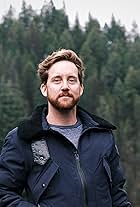 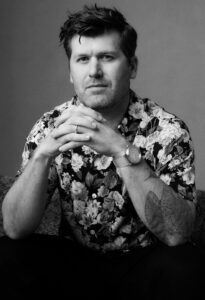 Train Dreams, screenplay by Clint Bentley and Greg Kwedar, based on the novella by Denis Johnson – Based on a novella by Denis Johnson, published in 2002, TRAIN DREAMS is a film that manages to balance wordy voiceovers with poignant silences. It tells the life story, in no particular chronological order, or Robert Grainier, a man who works felling trees for the railroads. His work takes him away for months at a time from from his wife and infant daughter and their sturdy, well-built cabin along a river in Idaho. The sense of place in every location is powerfully conveyed, and when Robert takes the train home to his family, his sleep is beset with dreams both beautiful and horrible. Orphaned as a child, a witness to murder and other horrible crimes, Robert is haunted by memories and possibly guilt or regret, that he didn’t intervene or speak out. These spectres of the past are always near, even as his thoughts are filled with love for his wife and daughter. The story is full of fine narrative detail, impossible to stuff into a100 minute film. The adaptation, by director Clint Bentley and Greg Kwedar (who wrote 2024’s SING SING), pares down the story to events large and small, a tapestry seen at a distance and up close, colors blurred into fading memories, images of tragedy and triumph stitched in stark relief, moments and years of a life woven together. — pa Train Dreams, screenplay by Clint Bentley and Greg Kwedar, based on the novella by Denis Johnson – Based on a novella by Denis Johnson, published in 2002, TRAIN DREAMS is a film that manages to balance wordy voiceovers with poignant silences. It tells the life story, in no particular chronological order, or Robert Grainier, a man who works felling trees for the railroads. His work takes him away for months at a time from from his wife and infant daughter and their sturdy, well-built cabin along a river in Idaho. The sense of place in every location is powerfully conveyed, and when Robert takes the train home to his family, his sleep is beset with dreams both beautiful and horrible. Orphaned as a child, a witness to murder and other horrible crimes, Robert is haunted by memories and possibly guilt or regret, that he didn’t intervene or speak out. These spectres of the past are always near, even as his thoughts are filled with love for his wife and daughter. The story is full of fine narrative detail, impossible to stuff into a100 minute film. The adaptation, by director Clint Bentley and Greg Kwedar (who wrote 2024’s SING SING), pares down the story to events large and small, a tapestry seen at a distance and up close, colors blurred into fading memories, images of tragedy and triumph stitched in stark relief, moments and years of a life woven together. — pa |
|
 Hedda, screenplay by screenplay by Nia DaCosta, based on the play by Henrik Ibsen – No one would have expected Ibsen to blaze across the screen with the passion, fire, joy, and depravity of Nia DaCosta’s Hedda. To start, flipping the gender of Hedda’s love interest was inspiring, and worked so well, bringing gender disparities to the fore, supported by Nina Hoss’ thrilling performance. Moving the setting from late 1800’s Norway to 1950’s England gives the story a jolt of energy that the film truly takes advantage of. Confining all the actions from the play into a chaotic party in a single night builds up the drama between the characters and allows Tessa Thompson’s pitch perfect Hedda to be the center of all the activity. And without spoiling the film, DaCosta allows the conclusion of Hedda to follow the spirit of Ibsen’s play, but adds a level of ambiguity that keeps a sense of mystery to Hedda’s final fate. Combined with the top notch acting, and the impeccable production design, cinematography, and editing Hedda is a true gem. –mrc Hedda, screenplay by screenplay by Nia DaCosta, based on the play by Henrik Ibsen – No one would have expected Ibsen to blaze across the screen with the passion, fire, joy, and depravity of Nia DaCosta’s Hedda. To start, flipping the gender of Hedda’s love interest was inspiring, and worked so well, bringing gender disparities to the fore, supported by Nina Hoss’ thrilling performance. Moving the setting from late 1800’s Norway to 1950’s England gives the story a jolt of energy that the film truly takes advantage of. Confining all the actions from the play into a chaotic party in a single night builds up the drama between the characters and allows Tessa Thompson’s pitch perfect Hedda to be the center of all the activity. And without spoiling the film, DaCosta allows the conclusion of Hedda to follow the spirit of Ibsen’s play, but adds a level of ambiguity that keeps a sense of mystery to Hedda’s final fate. Combined with the top notch acting, and the impeccable production design, cinematography, and editing Hedda is a true gem. –mrc |
|
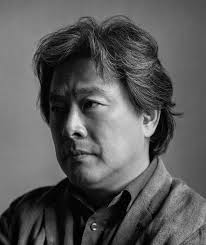 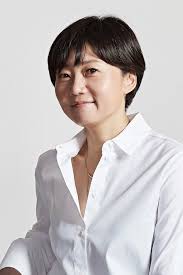 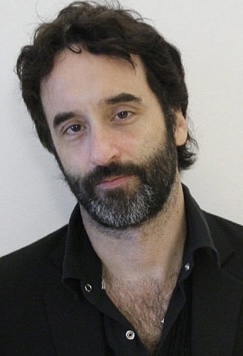  No Other Choice, screenplay by Park Chan-wook, Lee Kyoung-mi, Don McKellar and Jahye Lee, based on the novel by Donald E. Westlake – Many films this year tried to capture the anxieties of the current moment, but NO OTHER CHOICE might be the one that feels most attuned to it. Beneath its dark humor lies a sharp portrait of powerlessness in late-stage capitalism: corporate consolidation, shrinking opportunity, and the creeping fear of automation replacing human work. Yet the screenplay never settles for the obvious narrative beat, consistently keeping the audience on their toes. Every character feels vivid and recognizable, and even as the father’s journey drives the plot, each family member gets a clear emotional arc. It channels real frustration while still delivering a wildly entertaining ride. –cf No Other Choice, screenplay by Park Chan-wook, Lee Kyoung-mi, Don McKellar and Jahye Lee, based on the novel by Donald E. Westlake – Many films this year tried to capture the anxieties of the current moment, but NO OTHER CHOICE might be the one that feels most attuned to it. Beneath its dark humor lies a sharp portrait of powerlessness in late-stage capitalism: corporate consolidation, shrinking opportunity, and the creeping fear of automation replacing human work. Yet the screenplay never settles for the obvious narrative beat, consistently keeping the audience on their toes. Every character feels vivid and recognizable, and even as the father’s journey drives the plot, each family member gets a clear emotional arc. It channels real frustration while still delivering a wildly entertaining ride. –cf |
|
 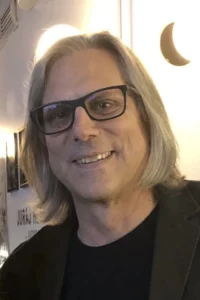  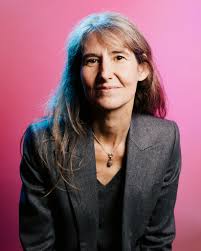 Nouvelle Vague, screenplay by Holly Gent, Vincent Palmo Jr., Michèle Pétin, Laetitia Masson – The screenplay of NOUVELLE VAGUE is cinematic poetry, weaving elliptical dialogue with layered reflections on identity and reinvention. The fragmented structure of the film and playful self-awareness invite audiences to actively participate in culling meaning and joining already established acquaintances where they are in their conversations, turning narrative into an act of discovery. With sharp philosophical undertones and a rhythm that feels both spontaneous and meticulously composed, the writing challenges convention while remaining deeply evocative. What results is a script that embodies the spirit of the new wave it invokes—restless, daring, and endlessly thought-provoking. –br Nouvelle Vague, screenplay by Holly Gent, Vincent Palmo Jr., Michèle Pétin, Laetitia Masson – The screenplay of NOUVELLE VAGUE is cinematic poetry, weaving elliptical dialogue with layered reflections on identity and reinvention. The fragmented structure of the film and playful self-awareness invite audiences to actively participate in culling meaning and joining already established acquaintances where they are in their conversations, turning narrative into an act of discovery. With sharp philosophical undertones and a rhythm that feels both spontaneous and meticulously composed, the writing challenges convention while remaining deeply evocative. What results is a script that embodies the spirit of the new wave it invokes—restless, daring, and endlessly thought-provoking. –br |
|
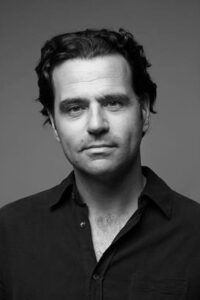 Sharp Corner, screenplay by Jason Buxton, based on the short story by Russell Wangersky – Jason Buxton’s SHARP CORNER is a controlled study in tension, transforming an ordinary domestic setting into a site of creeping psychological uneasy. A single moment with sparse dialogue and mounting silence transforms that particular scene into a fault line for deepening tension and moral ambiguity. Following bouts of sharp-written dialogue, the script then crafts scenes that escalate with quiet precision, allowing dread to build in the spaces between words. Unlike many thrillers that focus on monumental events, SHARP CORNER stands apart for its ability to mine profound suspense from everyday fears. –br Sharp Corner, screenplay by Jason Buxton, based on the short story by Russell Wangersky – Jason Buxton’s SHARP CORNER is a controlled study in tension, transforming an ordinary domestic setting into a site of creeping psychological uneasy. A single moment with sparse dialogue and mounting silence transforms that particular scene into a fault line for deepening tension and moral ambiguity. Following bouts of sharp-written dialogue, the script then crafts scenes that escalate with quiet precision, allowing dread to build in the spaces between words. Unlike many thrillers that focus on monumental events, SHARP CORNER stands apart for its ability to mine profound suspense from everyday fears. –br |
|
Best Use of Music in a Film |
|
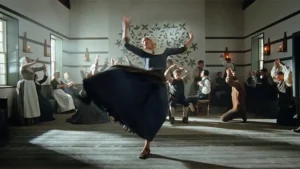 The Testament of Ann Lee, Daniel Blumberg, Composer – If faith is the lifeblood of Shaker culture, music might just be the pulse. In THE TESTAMENT OF ANN LEE, the music is the pulse of the film. Weaving Shaker-inspired melodies into the very fabric of the film’s storytelling, the music is a living, breathing force that expresses devotion, struggle, and communal identity with a presence that is extraordinary, if not haunting in its effectiveness. Each vocal layer deepens the film’s spiritual resonance, a conduit between sound and narrative. The result is an immersive experience where music doesn’t just underscore the story–it is the story. –br The Testament of Ann Lee, Daniel Blumberg, Composer – If faith is the lifeblood of Shaker culture, music might just be the pulse. In THE TESTAMENT OF ANN LEE, the music is the pulse of the film. Weaving Shaker-inspired melodies into the very fabric of the film’s storytelling, the music is a living, breathing force that expresses devotion, struggle, and communal identity with a presence that is extraordinary, if not haunting in its effectiveness. Each vocal layer deepens the film’s spiritual resonance, a conduit between sound and narrative. The result is an immersive experience where music doesn’t just underscore the story–it is the story. –br |
|
 The Ballad of Wallis Island, Gary Welh, Music Superivsor – Fractured musical duo McGwyer (Tim Basden) and Mortimer (Carey Mulligan) find themselves reunited on the remote isle of this film’s title thanks to widower Charles (a terrific Tim Key) who has invited them there to perform a concert. With a screenplay by Basden and Key, it’s a quirky comedy with a melancholic turn fortified by the stellar folk-rock compositions Basden wrote himself and performs with Mulligan. These songs give the film an authenticity, particularly as we see what profound effect they continue to have for Charles and also their creators. –ck The Ballad of Wallis Island, Gary Welh, Music Superivsor – Fractured musical duo McGwyer (Tim Basden) and Mortimer (Carey Mulligan) find themselves reunited on the remote isle of this film’s title thanks to widower Charles (a terrific Tim Key) who has invited them there to perform a concert. With a screenplay by Basden and Key, it’s a quirky comedy with a melancholic turn fortified by the stellar folk-rock compositions Basden wrote himself and performs with Mulligan. These songs give the film an authenticity, particularly as we see what profound effect they continue to have for Charles and also their creators. –ck |
|
The History of Sound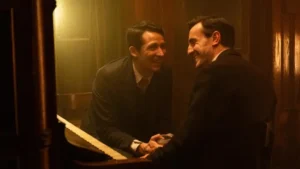 , Lucy Bright, Music Supervisor – , Lucy Bright, Music Supervisor – |
|
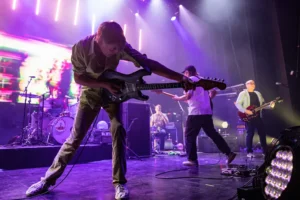 Pavements, Keegan DeWitt and Dabney Morris, Composers – What better way to honor a band that never seemed entirely comfortable with the spotlight than giving half the performances to other musicians? PAVEMENTS spreads its songs across rehearsal scenes, reinterpretations, and playful covers from artists like Snail Mail and Soccer Mommy. The loose, lackadaisical practice sessions capture the band’s pessimism and charm while still celebrating the music’s influence. This writer can confirm that at least one viewer unfamiliar with Pavement left as a convert. By letting the songs process through different voices, the film’s form feels perfectly suited to a band that seemingly never cared much for tidy narratives. –cf Pavements, Keegan DeWitt and Dabney Morris, Composers – What better way to honor a band that never seemed entirely comfortable with the spotlight than giving half the performances to other musicians? PAVEMENTS spreads its songs across rehearsal scenes, reinterpretations, and playful covers from artists like Snail Mail and Soccer Mommy. The loose, lackadaisical practice sessions capture the band’s pessimism and charm while still celebrating the music’s influence. This writer can confirm that at least one viewer unfamiliar with Pavement left as a convert. By letting the songs process through different voices, the film’s form feels perfectly suited to a band that seemingly never cared much for tidy narratives. –cf |
|
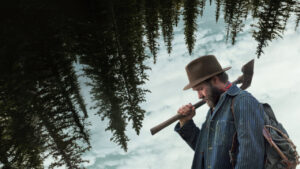 Train Dreams Bryce Dressner, Music- Train Dreams Bryce Dressner, Music- |
|
Best Sound Design |
|
 Deaf President Now!, Samir Foco, Sound Designer – The sound design in DEAF PRESIDENT NOW! is striking not just for what we hear, but for when we suddenly don’t. Sound regularly drops out, placing hearing audiences in moments of confusion and frustration that help approximate the Deaf experience at the center of the story. At the same time, the film reminds us that people can still be fully “heard” without sound at all – through presence, movement, and collective action. When the soundtrack returns, it swells with even greater force, underscoring the emotional power of the protest. It’s thoughtful, purposeful work that deepens the film’s perspective without ever feeling gimmicky. –cf Deaf President Now!, Samir Foco, Sound Designer – The sound design in DEAF PRESIDENT NOW! is striking not just for what we hear, but for when we suddenly don’t. Sound regularly drops out, placing hearing audiences in moments of confusion and frustration that help approximate the Deaf experience at the center of the story. At the same time, the film reminds us that people can still be fully “heard” without sound at all – through presence, movement, and collective action. When the soundtrack returns, it swells with even greater force, underscoring the emotional power of the protest. It’s thoughtful, purposeful work that deepens the film’s perspective without ever feeling gimmicky. –cf |
|
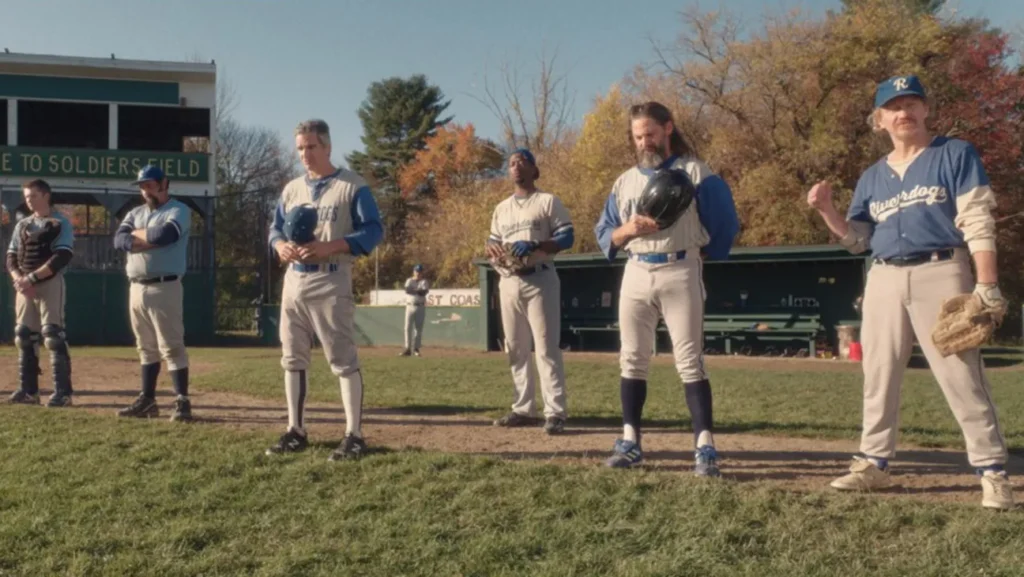 Eephus, Michael Basta, Carson Lund, Sound Designers – Nearly NO EXIT transferred to a small town baseball field (or perhaps a middle-aged DAZED AND CONFUSED.) Carson Lund, a cinematographer on such recent American indies as HAM ON RYE aims for a Robert Altman-esque diorama of an ultra-specific milieu with his directorial debut and attains much of it through its sound design: intersecting conversations (often already in progress) on and off the diamond, snippets of radio commercials, even venerable documentarian Frederick Wiseman’s (RIP) brief narration at the beginning of each chapter, all of it coalescing into something as causal and random as passing time over an endless day. –ck Eephus, Michael Basta, Carson Lund, Sound Designers – Nearly NO EXIT transferred to a small town baseball field (or perhaps a middle-aged DAZED AND CONFUSED.) Carson Lund, a cinematographer on such recent American indies as HAM ON RYE aims for a Robert Altman-esque diorama of an ultra-specific milieu with his directorial debut and attains much of it through its sound design: intersecting conversations (often already in progress) on and off the diamond, snippets of radio commercials, even venerable documentarian Frederick Wiseman’s (RIP) brief narration at the beginning of each chapter, all of it coalescing into something as causal and random as passing time over an endless day. –ck |
|
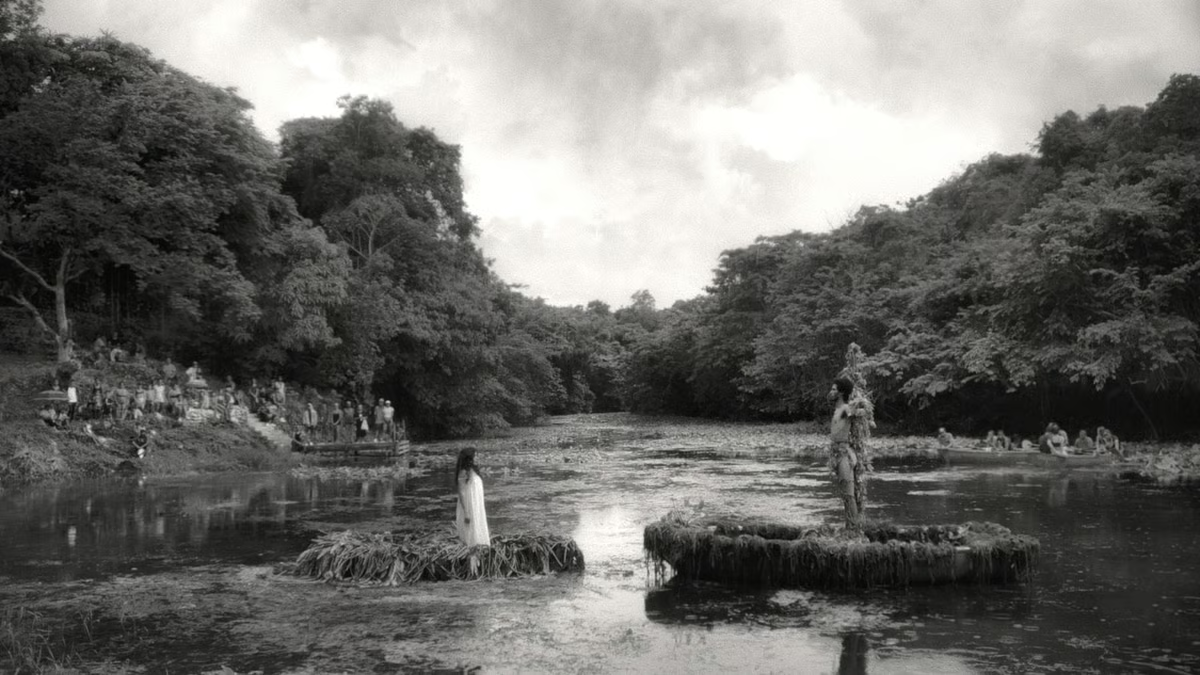 Oceans Are the Real Continents, Tommaso Barbaro, Sound Designer – Oceans Are the Real Continents, Tommaso Barbaro, Sound Designer – |
|
 Souleymane’s Story, Pierre Bariaud, Marc-Olivier Brullé, Charlotte Butrak, Sound Editors – Much of Souleymane’s Story takes place on the hectic streets of Paris, while our title character hustles between his food delivery job on bicycle, to various modes of public transportation as he works and an immigrant seeking asylum, to follow the protocols that will allow him to stay in France. The sound design of the streets of Paris immerse the film into a buzzing, non-stop sense of movement as traffic, street conversations, the whir of the bicycle, and general city chaos. The stark change for the final twenty minutes that take place in an office cubicle with an intense, two-person conversation is jolting and powerful. –mrc Souleymane’s Story, Pierre Bariaud, Marc-Olivier Brullé, Charlotte Butrak, Sound Editors – Much of Souleymane’s Story takes place on the hectic streets of Paris, while our title character hustles between his food delivery job on bicycle, to various modes of public transportation as he works and an immigrant seeking asylum, to follow the protocols that will allow him to stay in France. The sound design of the streets of Paris immerse the film into a buzzing, non-stop sense of movement as traffic, street conversations, the whir of the bicycle, and general city chaos. The stark change for the final twenty minutes that take place in an office cubicle with an intense, two-person conversation is jolting and powerful. –mrc |
|
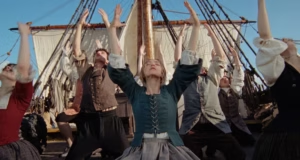 The Testament of Ann Lee, Andy Neil, Sound Designer – The sound design of THE TESTAMENT OF ANN LEE is a transcendent achievement, transforming silence, breath, and song into a spiritual force. Although layered choral textures are an obvious contributor to the effective sound design, the design team relishes in stark environmental sounds and moments of near-quiet reverence to create an aural landscape that feels both intimate and divine. Each creak of wood along with the more overt swell of collective voices deepens the emotional resonance, immersing audiences in a world shaped as much by devotion as by doubt. As Ann Lee looks to an unseen presence, the sound design bolsters that spine-tingling effect of an unseen presence: a revelation for the ears amid a band of believers seeking spiritual revelations. –br The Testament of Ann Lee, Andy Neil, Sound Designer – The sound design of THE TESTAMENT OF ANN LEE is a transcendent achievement, transforming silence, breath, and song into a spiritual force. Although layered choral textures are an obvious contributor to the effective sound design, the design team relishes in stark environmental sounds and moments of near-quiet reverence to create an aural landscape that feels both intimate and divine. Each creak of wood along with the more overt swell of collective voices deepens the emotional resonance, immersing audiences in a world shaped as much by devotion as by doubt. As Ann Lee looks to an unseen presence, the sound design bolsters that spine-tingling effect of an unseen presence: a revelation for the ears amid a band of believers seeking spiritual revelations. –br |
|
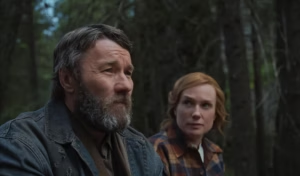 Train Dreams, Lee Salevan, Supervising Sound Editor – Train Dreams, Lee Salevan, Supervising Sound Editor – |
|
Best Editing |
|
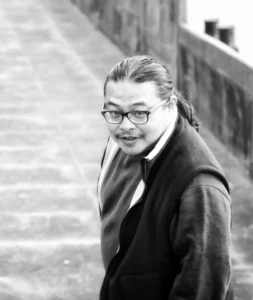   Yang Chao, Matthieu Laclau, Xudong Lin, Caught by the Tides – CAUGHT BY THE TIDES showcases editing of astonishing precision and emotional intelligence. Every cut feels alive, pulsing with the rhythm of memory, loss, and the unstoppable flow of time. The editors sculpt the film’s shifting landscapes and decades-spanning narrative into a seamless, hypnotic experience, guiding viewers through intimate moments and sweeping historical change with effortless grace by weaving together unused footage from the director’s previous films, or even scenes from those films directly, as well as newly shot scenes.. Scenes dissolve into one another like fragments of a dream, yet the storytelling remains sharply coherent and deeply affecting. Silence is used with as much power as motion, creating pockets of reflection that intensify the film’s emotional weight. The interplay of archival textures, contemporary footage, and the protagonists’ journey is handled with rare artistry, making the edit not just a technical achievement but the film’s beating heart. It’s a masterclass in cinematic rhythm—bold, fluid, immersive—and a breathtaking reminder of how transformative great editing can be. Yang Chao, Matthieu Laclau, Xudong Lin, Caught by the Tides – CAUGHT BY THE TIDES showcases editing of astonishing precision and emotional intelligence. Every cut feels alive, pulsing with the rhythm of memory, loss, and the unstoppable flow of time. The editors sculpt the film’s shifting landscapes and decades-spanning narrative into a seamless, hypnotic experience, guiding viewers through intimate moments and sweeping historical change with effortless grace by weaving together unused footage from the director’s previous films, or even scenes from those films directly, as well as newly shot scenes.. Scenes dissolve into one another like fragments of a dream, yet the storytelling remains sharply coherent and deeply affecting. Silence is used with as much power as motion, creating pockets of reflection that intensify the film’s emotional weight. The interplay of archival textures, contemporary footage, and the protagonists’ journey is handled with rare artistry, making the edit not just a technical achievement but the film’s beating heart. It’s a masterclass in cinematic rhythm—bold, fluid, immersive—and a breathtaking reminder of how transformative great editing can be. |
|
  Henry Hayes, Simon Njoo, The Plague – Henry Hayes, Simon Njoo, The Plague – |
|
 Bi Gan, Resurrection – Bi Gan, Resurrection – |
|
 Sofía Subercaseaux, The Testament of Ann Lee – Sofía Subercaseaux, The Testament of Ann Lee – |
|
 Parker Laramie, Train Dreams – Parker Laramie, Train Dreams – |
|
 Xi Feng, Universal Language – Xi Feng, Universal Language – |
|
Best Cinematography |
|
 Adolpho Veloso, Train Dreams – Inasmuch as TRAIN DREAMS relishes in its quiet, unspoken moments, the cinematography appropriately offers moments where the gasps or appreciative sighs of audience members supply the audible responses in these moments of silence or stillness. The vastness and grandeur of the American frontier is on full display through patient, lingering shots that amplify the solitude of protagonist Robert Granier while delicate shifts in natural light mark the passage of time and memory. Subtle visual motifs such as smoke drifting across the frame and human figures dwarfed by landscapes create a poetic rhythm that matches the film’s tone. The thematic observation of the beauty and tragedy of a simple life is revealed in the cinematic unfolding of an ever-changing world. –br Adolpho Veloso, Train Dreams – Inasmuch as TRAIN DREAMS relishes in its quiet, unspoken moments, the cinematography appropriately offers moments where the gasps or appreciative sighs of audience members supply the audible responses in these moments of silence or stillness. The vastness and grandeur of the American frontier is on full display through patient, lingering shots that amplify the solitude of protagonist Robert Granier while delicate shifts in natural light mark the passage of time and memory. Subtle visual motifs such as smoke drifting across the frame and human figures dwarfed by landscapes create a poetic rhythm that matches the film’s tone. The thematic observation of the beauty and tragedy of a simple life is revealed in the cinematic unfolding of an ever-changing world. –br |
|
L orenzo Casadio, Oceans Are the Real Continents – orenzo Casadio, Oceans Are the Real Continents – |
|
 Jingsong Dong, Resurrection – Jingsong Dong, Resurrection – |
|
 Norm Li, Blue Sun Palace – Similar to Drive My Car a couple of years ago, Norm Li’s Blue Sun Palace takes a shocking and drastic turn about a quarter of the way into the running time. The tone of the film shifts so markedly, and Li’s photography shifts with it, moving from muted yet soothing colors, to a much more somber, grainy palate filled with blues and grays exposing how fragile life can be. Li’s camera glides smoothly and slowly through scenes, lingering on faces, and capturing the streetscapes of Flushing, Queens in such a way that is both disorienting and providing the sense of a faraway country, one that the migrants who re the focus of the film could have come from. –mrc Norm Li, Blue Sun Palace – Similar to Drive My Car a couple of years ago, Norm Li’s Blue Sun Palace takes a shocking and drastic turn about a quarter of the way into the running time. The tone of the film shifts so markedly, and Li’s photography shifts with it, moving from muted yet soothing colors, to a much more somber, grainy palate filled with blues and grays exposing how fragile life can be. Li’s camera glides smoothly and slowly through scenes, lingering on faces, and capturing the streetscapes of Flushing, Queens in such a way that is both disorienting and providing the sense of a faraway country, one that the migrants who re the focus of the film could have come from. –mrc |
|
 William Rexer, The Testament of Ann Lee – William Rexer, The Testament of Ann Lee – |
|
 Isabelle Stachtchenko, Universal Language – Isabelle Stachtchenko, Universal Language – |
|
Best Production Design |
|
 Qiang Liu, Resurrection – Crafting an ode to cinema by traversing the entire 20th Century through five different genre-specific segments, Bi Gan’s sci-fi epic kicks off with a startling facsimile of a silent film so intricately detailed that it feels more like a brand new experience than any sort of retread. RESURRECTION then moves through other just as heavily-stylized worlds (a wintry noir, a spare meditation involving Buddhist monks, a con artist mentoring a youthful assistant) before climaxing with something resembling a hallucinatory Y2K epic Wong Kar-wai never got around to making (in one extended, unbroken shot, no less.) –ck Qiang Liu, Resurrection – Crafting an ode to cinema by traversing the entire 20th Century through five different genre-specific segments, Bi Gan’s sci-fi epic kicks off with a startling facsimile of a silent film so intricately detailed that it feels more like a brand new experience than any sort of retread. RESURRECTION then moves through other just as heavily-stylized worlds (a wintry noir, a spare meditation involving Buddhist monks, a con artist mentoring a youthful assistant) before climaxing with something resembling a hallucinatory Y2K epic Wong Kar-wai never got around to making (in one extended, unbroken shot, no less.) –ck |
|
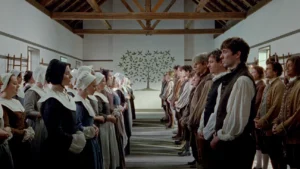 Sam Bader, The Testament of Ann Lee – Sam Bader, The Testament of Ann Lee – |
|
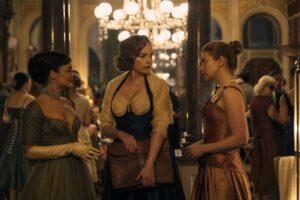 Cara Brower, Hedda – Cara Brower, Hedda – |
|
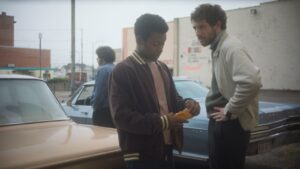 Anthony Gasparro, The Mastermind – Nominated last year for Kinds of Kindness, Anthony Gasparro takes quite a turn in his recreation of 1970’s suburban Boston in Kelly Reichardt’s The Matermind. Without using obvious signals to provide the early 70’s backdrop, Gasparro infuses nearly every moment with the feel of the time in small ways, from the jackets the men wear, to the food they eat for dinner. In a film disguised as a heist film, but really about the ways society is changing during the time, the production design has a profound impact on how we view the world in this tightly constructed, beautifully rendered film. –mrc Anthony Gasparro, The Mastermind – Nominated last year for Kinds of Kindness, Anthony Gasparro takes quite a turn in his recreation of 1970’s suburban Boston in Kelly Reichardt’s The Matermind. Without using obvious signals to provide the early 70’s backdrop, Gasparro infuses nearly every moment with the feel of the time in small ways, from the jackets the men wear, to the food they eat for dinner. In a film disguised as a heist film, but really about the ways society is changing during the time, the production design has a profound impact on how we view the world in this tightly constructed, beautifully rendered film. –mrc |
|
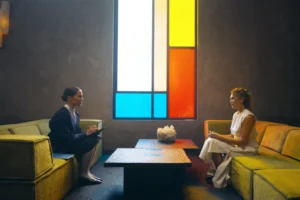 Jan Houllevigue, The Assessment – Jan Houllevigue, The Assessment – |
|
 Louisa SchabasL Universal Language – Transforming the city of Winnipeg to a Farsi-speaking country and a Persian culture is no mean feat, but Louisa Schabsi and her team manage to capture the gray, monolithic architecture of the city imbued with the colorful outdoor shops and dark tea houses of Iran exquisitely. Add to that a subzero winter, with snow and frozen patches sweeping through the landscape, and Universal Language boasts an unique vision. Seeing Canada’s famous Tim Horton’s chain reimagined as a Iranian teashop , or a bizarre butcher shop specializing in turkeys are alone worth an award. –mrc Louisa SchabasL Universal Language – Transforming the city of Winnipeg to a Farsi-speaking country and a Persian culture is no mean feat, but Louisa Schabsi and her team manage to capture the gray, monolithic architecture of the city imbued with the colorful outdoor shops and dark tea houses of Iran exquisitely. Add to that a subzero winter, with snow and frozen patches sweeping through the landscape, and Universal Language boasts an unique vision. Seeing Canada’s famous Tim Horton’s chain reimagined as a Iranian teashop , or a bizarre butcher shop specializing in turkeys are alone worth an award. –mrc |
|
Best Documentary |
|
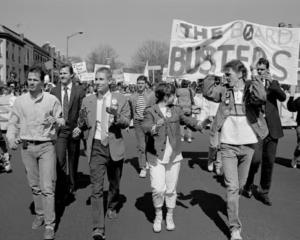 Deaf President Now! – Some Boston moviegoers were treated to watching DEAF PRESIDENT NOW! in a theater filled with Deaf audience members at IFFBoston, only heightening the emotional impact of this already powerful film. Like many great documentaries, its strength is built on compelling subjects: four student leaders with distinct personalities and approaches, perfectly capturing the various dynamics within a movement. The story unfolds cleanly through setbacks, tensions, and moments of doubt before reaching a deeply satisfying payoff. Efficient, engaging, and easy to recommend, the film tells an important and surprisingly under-known story with clarity and heart. At the risk of invoking a familiar quote, it’s the kind of documentary that inspiringly reminds you just how true Margaret Mead’s words are: a small group of committed people really can change the world. –cf Deaf President Now! – Some Boston moviegoers were treated to watching DEAF PRESIDENT NOW! in a theater filled with Deaf audience members at IFFBoston, only heightening the emotional impact of this already powerful film. Like many great documentaries, its strength is built on compelling subjects: four student leaders with distinct personalities and approaches, perfectly capturing the various dynamics within a movement. The story unfolds cleanly through setbacks, tensions, and moments of doubt before reaching a deeply satisfying payoff. Efficient, engaging, and easy to recommend, the film tells an important and surprisingly under-known story with clarity and heart. At the risk of invoking a familiar quote, it’s the kind of documentary that inspiringly reminds you just how true Margaret Mead’s words are: a small group of committed people really can change the world. –cf |
|
 Come See Me in the Good Light – Poet/activist Andrea Gibson’s ovarian cancer diagnosis in their late 40s provides the premise for filmmaker Ryan White following them and their partner, Megan Falley, mostly in and around their cozy Colorado home. Laugh-out-loud conversations about such not-profound activities as fingering and obscure word choices are given the same weight as the specter of death that can’t help but color everything. Still, such intimacy and candidness endear Andrea and Megan to us considerably. This is life not as a series of big moments but as something given inspiration and meaning by all the random, casual ones that naturally occur in the act of simply living. –ck Come See Me in the Good Light – Poet/activist Andrea Gibson’s ovarian cancer diagnosis in their late 40s provides the premise for filmmaker Ryan White following them and their partner, Megan Falley, mostly in and around their cozy Colorado home. Laugh-out-loud conversations about such not-profound activities as fingering and obscure word choices are given the same weight as the specter of death that can’t help but color everything. Still, such intimacy and candidness endear Andrea and Megan to us considerably. This is life not as a series of big moments but as something given inspiration and meaning by all the random, casual ones that naturally occur in the act of simply living. –ck |
|
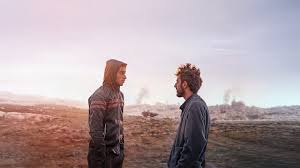 No Other Land – No Other Land – |
|
 The Perfect Neighbor – THE PERFECT NEIGHBOR grips audiences by peeling back the façade of suburbia to reveal a story that is raw and unsettling. The documentary uses patient storytelling and a keen investigative eye to build tension through layered perspectives and carefully curated detail. It balances empathy with accountability, allowing complexity to unfold without sensationalism. Remarkably, it achieves this with striking transparency—eschewing extraneous commentary or editorializing in favor of allowing the facts and voices to speak for themselves. Out of that comes a powerful, thought-provoking work that redefines what it means to truly know the people next door. –br The Perfect Neighbor – THE PERFECT NEIGHBOR grips audiences by peeling back the façade of suburbia to reveal a story that is raw and unsettling. The documentary uses patient storytelling and a keen investigative eye to build tension through layered perspectives and carefully curated detail. It balances empathy with accountability, allowing complexity to unfold without sensationalism. Remarkably, it achieves this with striking transparency—eschewing extraneous commentary or editorializing in favor of allowing the facts and voices to speak for themselves. Out of that comes a powerful, thought-provoking work that redefines what it means to truly know the people next door. –br |
|
 Porcelain War – Whenever I see a film documenting communities at war, particularly the films about the Ukraine invasion in the past couple of years, I am continually stunned that there hasn’t been a resolution yet. Watching these films and seeing what everyday people just trying to live their lives, or in the case of Porcelain War, create art, have to contend with it’s simply mind-boggling. This doc follow a married pair of artists, who find themselves embroiled in a war — actual combat — along side teachers, lawyers, computer techs and the regular folks in their community. Porcelain War does a remarkable job showing how people are somehow able to balance art and some semblance or a home life with the ongoing struggle of war. It’s heart-rending and infuriating that we have been dealing with this for several years. — mrc Porcelain War – Whenever I see a film documenting communities at war, particularly the films about the Ukraine invasion in the past couple of years, I am continually stunned that there hasn’t been a resolution yet. Watching these films and seeing what everyday people just trying to live their lives, or in the case of Porcelain War, create art, have to contend with it’s simply mind-boggling. This doc follow a married pair of artists, who find themselves embroiled in a war — actual combat — along side teachers, lawyers, computer techs and the regular folks in their community. Porcelain War does a remarkable job showing how people are somehow able to balance art and some semblance or a home life with the ongoing struggle of war. It’s heart-rending and infuriating that we have been dealing with this for several years. — mrc |
|
 Secret Mall Apartment – This documentary attracts its audience based upon the premise of a secret mall apartment, built by Michael Townsend and his artist cohorts, as an act of protest against gentrification. The film then directs the audience away from that endeavor, towards other more meaningful and impactful public artworks that intersect with the larger ideas of the secret mall apartment. Townsend, who was the genius behind the apartment and the other art projects in the film, was approached by over 30 directors after the story broke in 2007. It was not till 2019 after fortuitously meeting director Jeremy Workman in Greece while filming Lily Topples the world, that Townsend felt like he had finally found a director who could tell the story properly. Much of the original footage of the apartment was filmed with inexpensive Pentax Optio cameras the group purchased at the mall’s Radio Shack. Workman utilized that footage along with other historical and newly created footage to tell the amazing stories of Michael and the group of artists he worked with to create surprisingly meaningful yet (sadly?) ephemeral art. The film gets the viewer to ponder the question: What is art? There are a few big laughs along the way and a lot of heart as well. I was in awe of so much that Michael and his cohorts created. –jb Secret Mall Apartment – This documentary attracts its audience based upon the premise of a secret mall apartment, built by Michael Townsend and his artist cohorts, as an act of protest against gentrification. The film then directs the audience away from that endeavor, towards other more meaningful and impactful public artworks that intersect with the larger ideas of the secret mall apartment. Townsend, who was the genius behind the apartment and the other art projects in the film, was approached by over 30 directors after the story broke in 2007. It was not till 2019 after fortuitously meeting director Jeremy Workman in Greece while filming Lily Topples the world, that Townsend felt like he had finally found a director who could tell the story properly. Much of the original footage of the apartment was filmed with inexpensive Pentax Optio cameras the group purchased at the mall’s Radio Shack. Workman utilized that footage along with other historical and newly created footage to tell the amazing stories of Michael and the group of artists he worked with to create surprisingly meaningful yet (sadly?) ephemeral art. The film gets the viewer to ponder the question: What is art? There are a few big laughs along the way and a lot of heart as well. I was in awe of so much that Michael and his cohorts created. –jb |
|