
submitted by Cheryl Eagan-Donovan
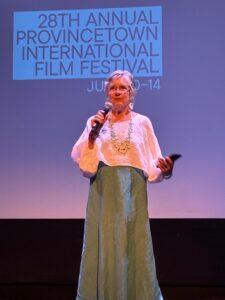
On Wednesday June 10th, I took the ferry from Boston’s seaport, along Chlotrudis Film Society members Vicki Oleskey and Beth Curran. It was a gorgeous day for the 90-minute trip to the end of Cape Cod where the Pilgrims first landed. Seating across from me on the upper deck was a young man with shoulder-length curly hair, wearing a t-shirt and baseball hat; could it be Dominic Sessa, star of the new Matt Johnson film Tony? We arrived at the pier at 2:30 p.m., checked in at our respective hotels, and picked up our festival passes. We all met at Bubala’s where Vicki and I each had an Aperol Spritz and an appetizer before heading off to see some films.
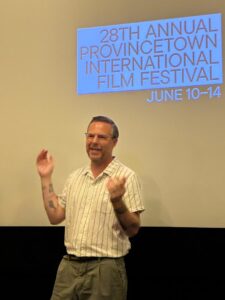
I opted for The Last Critic, the documentary about music critic Rober Christgau. The film premiered at SXSW earlier this year where it earned a Special Jury Award. First-time director Matty Wishnow talked about the inspiration for the project: he was writing a book about start-ups and while working a chapter on the importance of listening, it occurred to him that Christgau was “the world’s greatest listener”. His friend, documentary filmmaker Ben Wu, agreed and reached out to Paul Lovelace, an Austin filmmaker (Swamp Dogg Gets His Pool Painted 2024) who had interned for Christgau and made his thesis film on the legendary writer. Wishnow now had his co-producers, a cinematographer, an editor, and access to hours of archival footage. The team interviewed Christgau, his partner Carola Dibbell, and some very well-known writers and musicians including Colson Whitehead, Nelson George, Greil Marcus, Boots Riley, Randy Newman, and Thurston Moore of Sonic Youth, who ironically has the last word in an after-credits scene. Best known for his long-running column in the Village Voice, the “Consumer Guide” to new releases where he was the first to assign letter grades to albums, accompanied by pithy, often scathing reviews. More entertaining than the celebrities reading his reviews or contesting his criticisms of their own work are the “behind-the-scenes” looks at his New York apartment, every inch of space filled with books, records, CDs and cassette tapes, his process of listening nonstop to the same album until he hears something – or doesn’t, and his relationship with his wife and daughter. His partnership with Dibbell shines through as key to his success – she is a thoughtful editor and an enthusiastic listener in her own right. Ultimately, as Christgau faces the challenges the come with life as an eight-four-year-old enfant terrible, the film becomes a meditation on mortality and the writer’s life: what does it mean to look back on your life and consider your legacy? If anyone has a witty answer, it’s the dean of American rock criticism. If you love music, you’ll enjoy this retrospective. The Last Critic is still playing the festival circuit, not yet picked up for distribution.
The opening night film at the town hall was Stop! That! Train! by director Adam Shankman who also received the 2026 Honoree Tribute Award from the festival. Starring RuPaul as President Judy Gagwell and featuring a cast of fabulous drag queens (Ginger Minj, Jujubee, Symone, Brooke Lynn Hytes, and Marcia Marcia Marcia), this high-speed spoof of Airplane on the rails is a hot ticket. It opened in theaters June 12th to rave! reviews. Best friends Tess and Dee Dee join the crew of the Glamazonian Express after being laid off from the no budget Stank Rail and must compete with first-class stewardesses Amber, Ali and Ayshleiygh, as the train hurtles toward disaster. Great performances too by Latrice Royale, Sarah Michelle Geller, Rachel Bloom, Brian Jordan Alvarez, and Matt Rogers. Shot in just 19 days, commissioned by World of Wonder Films, the script was written by newcomers Christina Friel and Connor Wright. During the Q&A, the director thanked John Waters for making him feel welcome in Baltimore, showing him where they filmed Hairspray before Shankman began directing the 2007 adaptation. Following the screening, Waters praised the film for embracing the low-budget camp aesthetic and “not trying to look like film”. In addition to riffing on female buddy movies, the film also references Pedro Almodovar’s mile-high-club comedy I’m So Excited without the sex, and even namedrops Bong Joon Ho’s satire Snowpiercer. Not intended for audiences looking for serious cinema, Stop! That! Train! is nonstop fun – a perfect summer indie blockbuster.
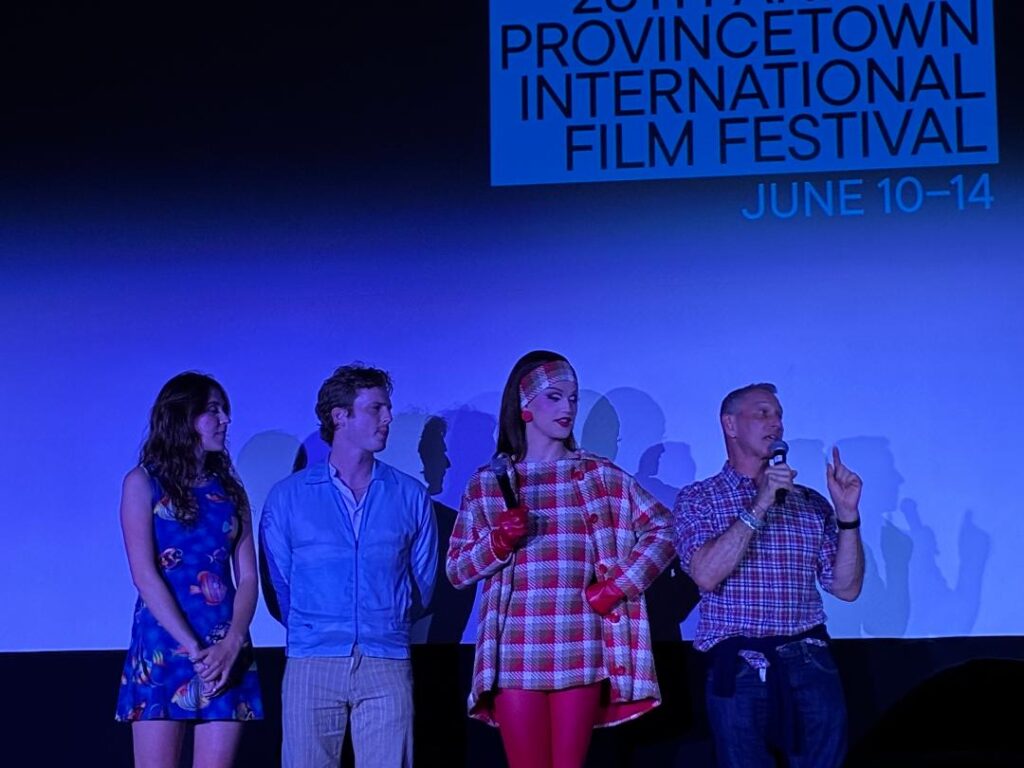
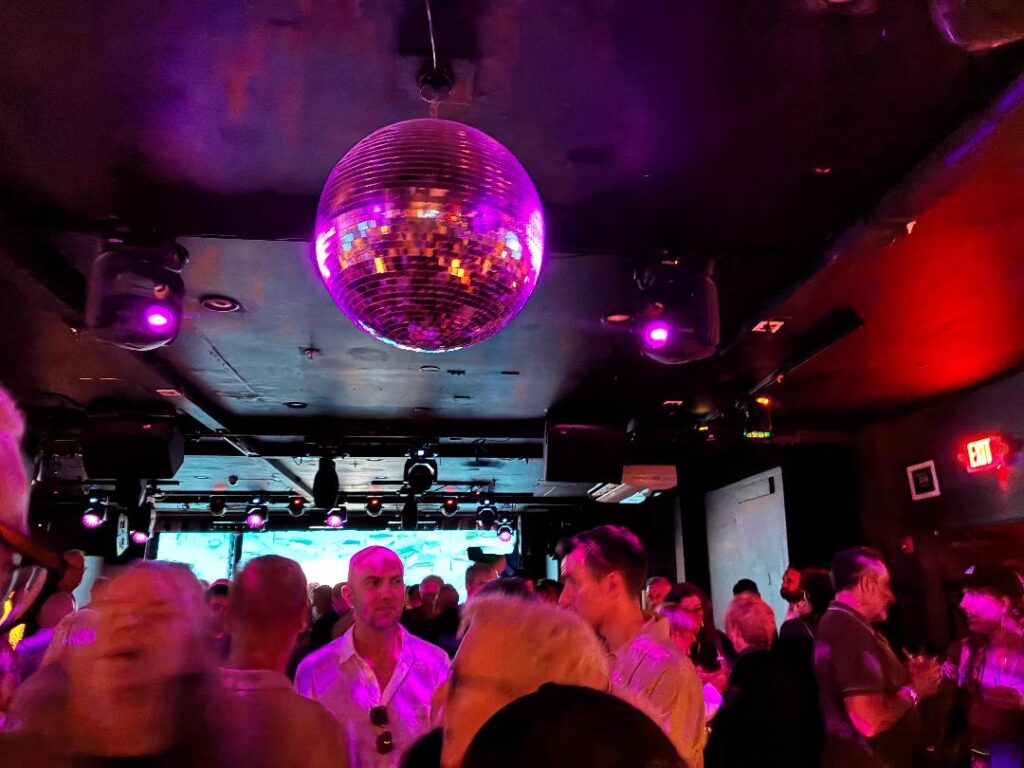
At the Crown and Anchor backroom, the opening night party was well attended, with filmmakers and stars in attendance. John Waters, accompanied by a very handsome young man, ordered a glass of white wine and I told the bartender, “I’ll have what he’s having”. I talked with Marcia Marcia Marcia and told her how much I loved her 1960s matching plaid mini dress, coat, and wide headband, and discussed my film with some of the Provincetown Film Society (PFS) board members. The space was dark and not as easy to navigate as previous years when the party spilled out onto the pool deck, but the hotel is currently being renovated by developer Tristan Schukraft, known for clubs and resorts in Fire Island and Puerta Vallarta, and the Abbey in West Hollywood. As a result, the food at the party was limited to passed hors d’oeuvres and the piano player was belting out tunes from the hotel roof. Nonetheless, it was a great turnout for the first night of the festival.
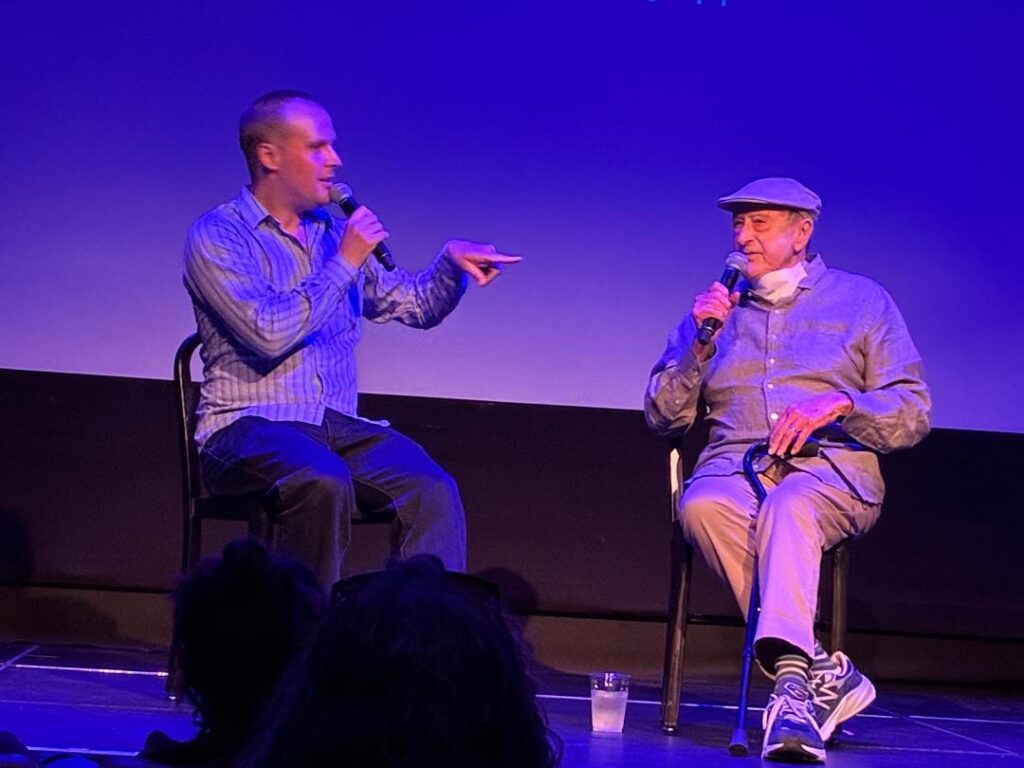
On Thursday I went to see Maddie’s Secret at the Art House theater. Chlotrudis Film Society President and PFS board member Michael Colford told me that the director John Early would be at the Q&A with a special guest and I was able to get a ticket that morning. The film premiered at the Toronto International Film Festival in 2025 and was just released by Magnolia Pictures on June 19th with a rollout at Alamo Drafthouse locations that include a live Q&A with Early. I initially found the premise off-putting – a woman with an eating disorder becomes an internet superstar food influencer – but in his directorial debut, Early achieves a perfect mix of comedy and melodrama, tinged with real emotional depth. Performances by Kate Berlant and Claudia O’Doherty were excellent, but it was Early’s portrayal of main character Maddie that carried the film to dizzying heights. In recent interviews since the theatrical opening, he has talked about his influences for the concept: a John Waters approach to the Douglas Sirk tearjerker, combined with hours of watching made-for-TV dramas about bulimic women with his sister when he was young, and at the Q&A in Provincetown, he joked about the difficulty of directing himself: there was no one there to say “Wow! That was amazing!” after a scene where he clearly killed. Michael had just seen Early off-Broadway in Wallace Shawn’s What We Did Before Our Moth Days, and the special guest for the post-screening discussion was director Andre Gregory. Gregory had not seen the film previously, and lavished praise on the star, comparing him to Marilyn Monroe and calling his performance “angelic”. The legendary theater director talked about meeting Monroe at a New Year’s Eve party in New York and being shocked by her charm and intelligence. Returning to the film’s brilliant mash-up of pathos and humor, Gregory quoted Beckett: “Nothing is funnier than something terrible”. Early seems to be having a Cole Escola moment!
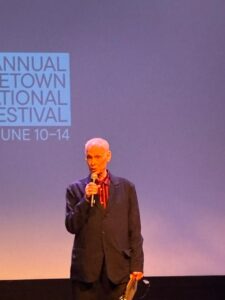
My next film was the restored print of Desperate Living, the 1977 John Waters film that the critics called “amateur psycho crap” according to the director. He proudly quoted Manohla Dargis who wrote “Why anyone would try and make something more pointless and ugly I can’t imagine – don’t bother!” The film, although a box office flop, became a cult hit of course – even without Waters muse Divine who was shooting another film at the time. Edith Massey is fabulous as the evil queen who could be mistaken for Donald Trump, greeting her subjects with “Hello Ugly” and “Hello Stupid” as she’s carried through the streets of Mortvillle by her leather-clad minions, and Mink Stole is brilliant as the “desperate” housewife Peggy who murders her husband and then flees to the town full of criminals and outcasts. Introducing the film, John explained that he was living in Provincetown when he wrote the script and was inspired by the idea of place without any laws. There’s a scene in the opening of the film where a distraught Peggy descends the stairs dramatically, moaning “What did I do to deserve this?” and I told John after the screening that it reminded me of the story he once told about coming down the stairs in his house when he was a kid, imitating 1950s movie stars, and he said, “well, that scene was shot in the same house”. He also talked about casting Liz Renay as Muffy St. Jacques, explaining that he knew he had to work with her after she ran down Hollywood Boulevard naked to promote one of her films. Always entertaining and gracious, John acknowledged a few of the actors from his films who were in the audience. Recently released in 4K by Criterion, Desperate Living stands the test of time, like so many of Waters’ early works.
As I headed down Commercial Street to the Town Hall for my next film, a guy walked by me with a sage green t-shirt, aviator sunglasses, and the same build and cropped haircut as my brother Christopher, who we lost suddenly just a year ago. A few seconds later his daughter sent me a photo of me and him standing on the deck of Aqua Bar, looking out at the harbor, the last time we were together in Provincetown. He was wearing the same green t-shirt and shades. I told my niece what had just happened and explained that I was going to see the documentary Mary Oliver: Saved by the Beauty of the World, and that I had read her poem “The Summer Day” to my siblings this year on the anniversary of his passing, because I thought it perfectly captured his love of nature and life. So, it was very emotional for me when the film opened with Steven Colbert attempting to recite that famous poem without getting choked up. He said he reads the poem to his kids every summer.
It’s a beautiful film that captures the poet in all her complexity, documenting her early years, becoming a writer, and her long-term relationship with photographer Molly Malone Cook, who gave up her own career to manage Mary’s. Oliver seems genuinely surprised by the continued demand for her work among young audiences. She opens up about her traumatic childhood abuse in an interview with Maria Shriver at the end of the film, revealing a vulnerability that she had kept hidden from the world for so long. John Waters was her neighbor in the East End, and took care of her when she was ill with lung cancer after Cook died, and before Oliver moved to Florida. He admired her fierce independence and called her a true “beatnik”. Director Sasha Waters talked about the writers who reached out to her, offering to read Oliver’s poems on screen, and mentioned that lots of the archival footage of Provincetown in the 1960s came from a short film made by the National Seashore Parks Service, Song of the Sandy Mooring. Mary Oliver: Saved by the Beauty of the World will air on the PBS series American Masters on August 25th.
The Thursday night Patron Party at the Gifford House was fun, with featured cocktails, prosecco, and lots of food. I talked with a few filmmakers and ran into my friend Julie Rocket who worked for the festival for several years as media manager. She was just back from a writers retreat in Italy where she was working on her latest project. Then I headed to the featured film of the evening, Teenage Sex and Death at Camp Miasma, the latest from Jane Schoenbrun and starring Hannah Einbinder, this year’s recipients of the PIFF Next Wave Awards. A slasher spoof exploring the genre as a metaphor for otherness, queerness, and dysmorphia, the film focuses on the relationship between Einbinder as Kris, a young filmmaker hired to remake a cult classic series and Billy, the aging star of the original film, played with finesse and ferocity by Gillian Anderson. Unfurling against the backdrop of an abandoned movie set and the ever-present threat of the return of the series’ monster who resides below the lake, the film mines the obsession that Kris worships Billy with, and the older woman’s role as the mentor who guides Kris to embrace her own fantasies. The film premiered at Cannes, where it won the Queer Palm and will be released theatrically on August 7th by Mubi. While I personally cannot relate to the genre in the way that the director clearly does, I am very much looking forward to seeing what they do next. A graduate of Boston University’s film program who worked as PA for the Safdie brothers, a writer for Filmmaker magazine, head of film partnerships for Kickstarter, and as an executive producer before making their first film, Jane is set to write and direct an adaptation of the graphic novel Black Hole for Netflix. After the screening and Q&A, I stopped in at Spiritus for a slice.
Friday morning’s Filmmaker Panel “Out in Hollywood: LGBTQ+ Directors on Power, Visibility, and the Stories That Get Told” was moderated by Rajendra Roy, film curator at MOMA, and featured directors C. Fitz, Francesca Gregorini, and John Krokidas. The discussion of current challenges and trends in the industry was lively and informative. Each of the panelists talked a bit about how they got their start: Francesca began by making Super 8 movies of a woman she was in love with; Fitz was a line producer for Queer Eye for the Straight Guy; John said he couldn’t throw a baseball as a kid but loved Roger Ebert’s books, spent his childhood in front of a TV, and went to college for acting before making his first short film; and Raj started as a programmer on the queer festival circuit. “Queer people hold a lot of power in this industry today”, Roy said, calling out Eugene Hernandez and Kim Yutani at Sundance, and Trisha Tuttle at Berlin as just a few examples. John talked about starting the Queer Committee at the Director’s Guild of America (DGA) just four years ago, after seeing that more representation was needed on film and TV sets. He said often he was the only gay director on set and that crew felt compelled not to be open about their identities or private lives. All agreed that financing is the biggest hurdle facing independent filmmakers today. They shared their current projects and offered some advice for aspiring directors. Fitz is re-releasing Jewel’s Catch One, the documentary that premiered at PIFF in 2016, and is developing two more docs about hidden heroes; John is working on a documentary about trans kids and their parents focusing on the story of South Carolina military dad fighting for his daughter’s healthcare rights; and Francesca optioned the 1949 novella Olivia by Dorothy Strachey and is adapting the story for film. The suggestions for future filmmakers were optimistic: “Just keep swimming!” Francesca said, noting that her Emmy nomination did not help her raise money for the new film. “Don’t give up” John said. His first film, Kill Your Darlings, took him ten years to make. “You have to be crazy and convince yourself that it will get done”. Fitz said, “Be brave and get to know other filmmakers.” They all had one very simple piece of advice: just do it, start making the film, it will gain momentum if you are passionate, and trust that thing you’re making will have a life of its own. An inspiring way to start the day, even for someone who’s just finished her third film and is still trying to find the money.
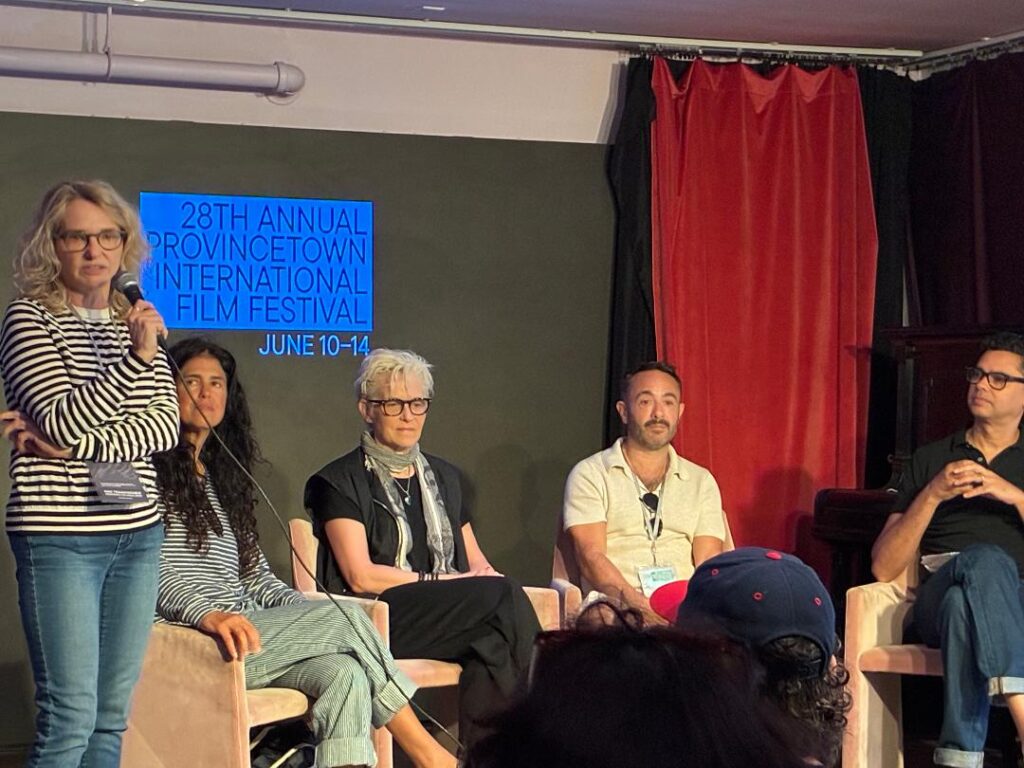
I headed to Crown and Anchor for the Next Wave Awards. The conversation with Jane Schoenbrun and Hannah Eidbinder was deftly guided by longtime PIFF regular producer Christine Vachon. She asked the two about working together on Teenage Sex and Death and they seemed genuinely enamored of one another as colleagues. Einbinder is a quick wit, and her comedy chops served her well. Schoenbrun takes their work seriously and came across as sincere when they talked about wanting to make a film that gave people permission to enjoy sex. They each talked a bit about their previous work. I Saw the TV Glow was another very personal film for Schoenbrun and the one that took their career to the next level in terms of recognition, and Eidbinder’s Emmy-award winning role as Ava on the popular TV series Hacks was the turning point in her work life. When asked what she wants to do next – more film or TV – the actress explained that she just wants to work on cool projects with great people, regardless of the medium or budget. Vachon warned the audience, as she always does at these events, not to pitch their own projects when the floor was opened for audience questions. Everyone complied; there was only time for a few questions, and the awards were bestowed by the founder of Killer Films with obvious respect for the two up-and-comers.
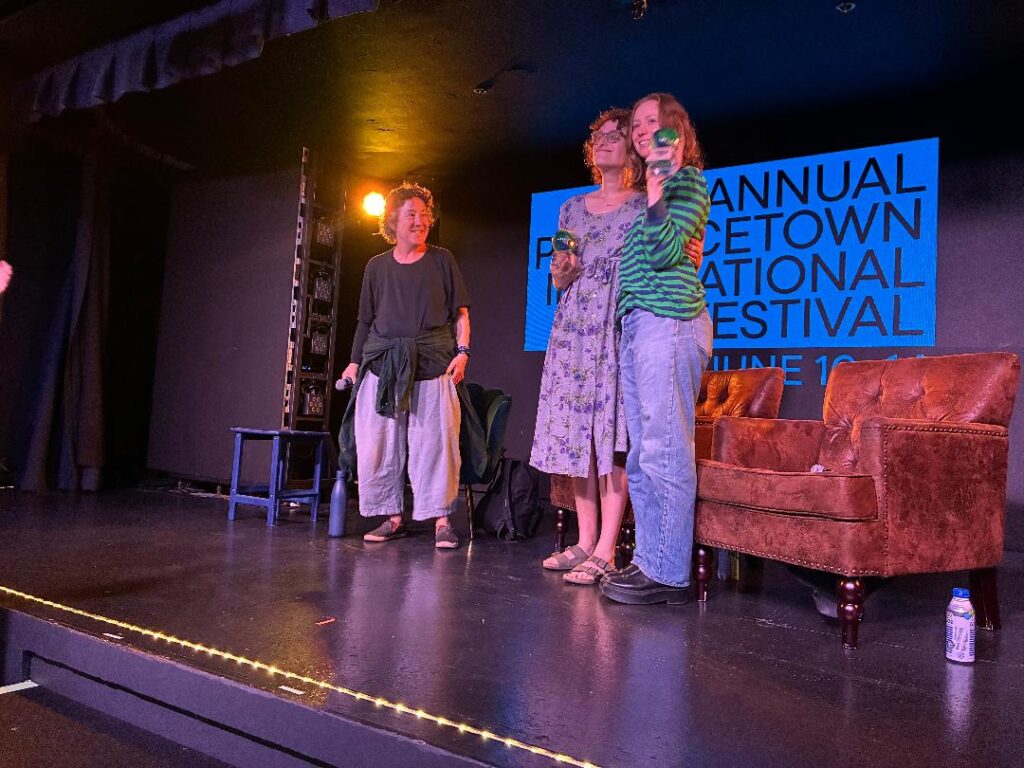
I had decided to see Mineshaft: The Cruising Murders next at the Art House. It was an interesting premise, exploring the intersection of the William Friedkin’s 1980 film Cruising starring Al Pacino, the protests that broke out in New York in response the portrayal of a serial murderer as a member of the gay leather community, and the true crime story of the death of Variety reporter Addison Verrill. The Mineshaft was a members-only sex club in Manhattan’s meat packing district and serves as a focal point for the Freidkin’s fictionalized screenplay and actual location where Verrill was last seen on the night of his murder. Directed by Jeffrey Schwarz (I Am Divine 2013), the film tries to tell three different stories but fails to create a cohesive narrative. At times, it feels like a veiled attempt to laud Friedkin’s daring and controversial film, even while acknowledging the scathing reviews by critics when it was released. The film careens back and forth from the story of the man who confessed to the murder, to the mother of the victim, to the fight by Village Voice writer Arthur Bell that inspired the activists who took to the streets in the West Village. Mineshaft premiered at Tribeca and has been praised for documenting a lost era in gay history, but I think it fails in a few ways. We do not understand why Verrill was murdered and if his attacker was in fact the elusive serial killer; and the film does not sufficiently explore the reasons that young audiences are now embracing Friedkin’s film as a cult classic. The director was not there for a post-screening Q&A which might have shed some light on his approach to the story.
Back to the Crown and Anchor for the big event of the day: A sneak preview of the film Tony with director Matt Johnson and stars Dominic Sessa and Leo Woodall. There was a long line in the courtyard an hour before the event was scheduled to begin. Matt has a huge following of devotees who first discovered his mockumentary web series Nirvanna the Band the Show (2007-2009) and later TV series (2017-2018) created with his friend and partner Jay McCarrol. These die-hard fans helped make the film Nirvanna the Band the Show the Movie (2025) a critically acclaimed festival favorite. The film version of Nirvanna was greenlit on the success of Johnson’s 2023 film BlackBerry and subsequently premiered at SXSW Film Festival where I saw it first. I went to see it again at the Coolidge Corner Theatre when they did their Oasis-style world tour. So, I guess you could say I’m a fan too. The conversation with the director and stars was led by Eugene Hernandez and Johnson joked that screening the excerpts of his new biopic about Anthony Bourdain with an introduction by the legendary festival director was like finally having his Sundance premiere. (In one episode of the TV series, they sneak backstage at Sundance and replace the scheduled screener with a DVD of their own film). Johnson is a very entertaining speaker as I discovered at the Q&A for BlackBerry at the Independent Film Festival Boston. He is a natural storyteller. The film looks great; the two clips we saw featured a young Bourdain arriving by ferry in Provincetown, and then his first day in the kitchen with Antonio Banderas the head chef, and his soon-to-be mentor and friend Woodall. From these short clips, you can see that they really captured the 1970s vibe and the unique flavor of the town. The director talked about writing the script while he was living in Provincetown in February. Sessa explained his approach to the character, saying that Johnson encouraged him to bring his own experience as a young man discovering himself in a “fish-out-of-water” setting. Johnson reiterated that there was no early footage of Bourdain before he became famous – they relied on what he wrote about his experiences in Ptown and one photograph to create the character – and that every actor brought their own life skills to the set. He said Banderas owns several restaurants in Spain and was completely at home in the kitchen. Woodall was quiet but when he did attempt to answer a question, Sessa leaned over and whispered something in Johnson’s ear. “What are you guys whispering about?” Woodall demanded. Johnson shot back, “If you must know we were just saying how every time you speak, the girls all giggle”. Probably lots of the guys too; if you saw him in season two of The White Lotus, you know. In the scene they screened, he comes off as a tough guy, one who bullies Sessa’s Tony at the beginning of the film, but the two young actors said they became fast friends on the 25-day shoot, of which only 5 were filmed in Provincetown. Tony is being released by A24 on August 7th.
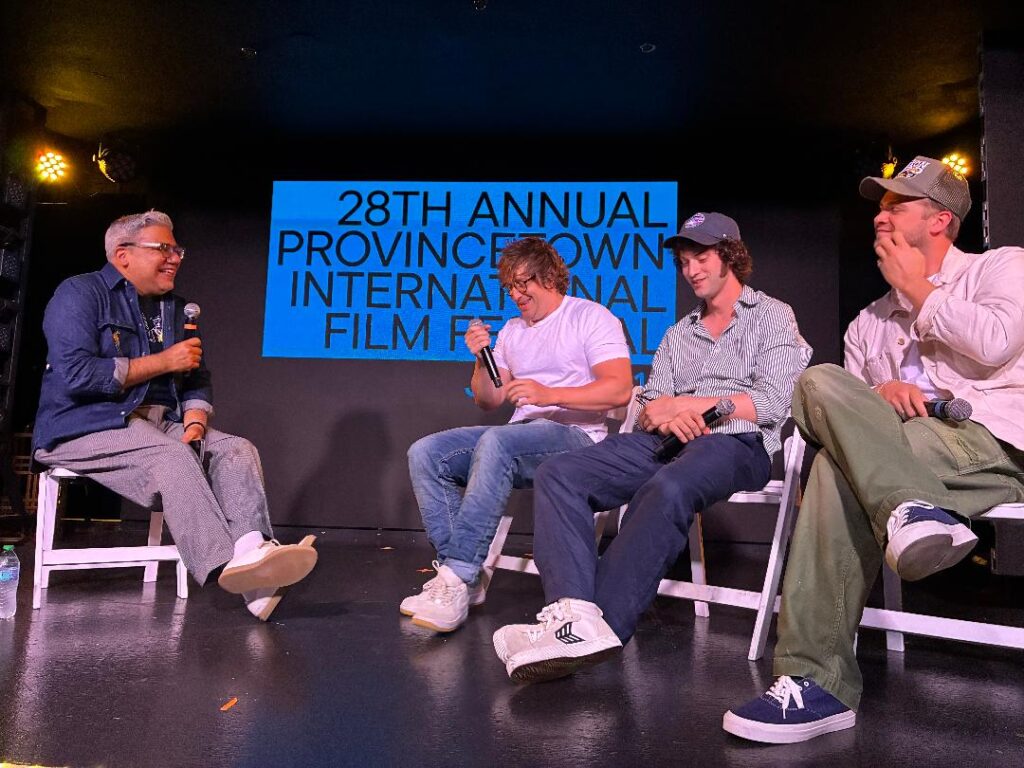
Earlier, reps from A24 handed out wristbands to everyone in line to attend a Clambake at the Provincetown Inn. Set up on the beach and lawn behind the pool were drinks and plenty of seafood provided by The Lobster Pot: lobster, steamers, mussels, clam chowder, Portuguese stew, corn-on-the-cob and salad. They also had an ice cream truck. I talked to lots of young people who had come down just for the day to see Matt Johnson, who showed up at the party with Sessa and spoke with fans and filmmakers. I managed to find a moment where I could interrupt and tell him how much we had enjoyed hanging out with him and the actors at the Shipwreck Lounge late one night last May. Johnson really is authentic and down-to-earth, even as he talks about his next 3-picture deal. He said earlier at the Q&A that one of the things he found most interesting about Bourdain was when he asked in his memoir about his time in Ptown, “what was I so angry about?” and Johnson said it made he think about something he had heard an elderly war hero say once. When asked what he regretted most in life, the man said it was that he hadn’t been kinder to people. That’s Matt Johnson.
I walked back to town and stopped in at the RSVPtown Gallery, featuring work by Karen Cappoto, whose painting is this year’s festival poster. I spoke with artist, told her I had seen her work on display at the home of the board member who hosted the PIFF fundraiser in Boston earlier this year, and chatted with another artist from Barcelona whose work was featured at the gallery.
The Friday night Industry Party was held at the Ann Packard Gallery this year. The space not as conducive to networking as the School House Gallery had always been but I did my best to connect with other filmmakers along with Chlotrudis members Vicki and Beth. I introduced myself to the director and composer of a short musical starring Alan Cumming that was also screening at Tribeca, talked for a long time with Stephen Kaiser-Pendergrast, editor and co-producer of the Anne Packard documentary, and told a couple of guys about my Shakespeare film who said they were at the festival looking for projects to fund!
At the Town Hall, I caught the last half hour of Lady Champagne and the Q&A. The film is directed by D’Arcy Drollinger, who stars in the title role as an exotic dancer wrongly accused of killing her husband, goes to prison, breaks out, and is pursued by a clueless detective in a madcap chase sequence that closes the film. Drollinger’s second film is a truly low-budget slapstick spoof set in San Francisco and featuring nationally known drag queens, including Alaska Thunderfuck, Varla Jean Merman, Jackie Beat, Peaches Christ, Meatball, Nicki Jizz, Honey Mahogany, and Sister Roma. During the Q&A, the director talked about how much fun it was to shoot on location and her gratitude for the support of the Bay Area drag community.
For a nightcap, I went to Ladyslipper, the new cocktail bar at the site of the former Little Red Store and ordered a disco nap, their version of an espresso martini. After 5, always lively, small bites and desserts, highly recommended.
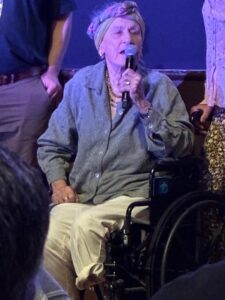
On Saturday morning I checked out of my hotel and went to the Town Hall to see Anne Packard: An Artist’s Resolve. When the 93-year-old painter walked into the room, accompanied by her daughter Cynthia, everyone stood and applauded. Packard is Ptown royalty and the community showed up in en masse to support her. Directed by another local artist, Arthur Egeli, the film is a loving portrait of a local treasure and her commitment to her family and her work. Anyone familiar with Packard’s work knows that her large-scale seascapes magically evoke the waves, the sand, the sky, and the wind on a two- dimensional canvas. I had seen her paintings over decades of Friday night art strolls, but I knew very little about her life. My cousin owns a few of her smaller pieces, but her work is out of my price range. The documentary traces her early years at Princeton with her professor husband, who eventually left her when she was 41 years old with five children. She says on camera, “he was a serial…well, just a serial”. That was when she decided to move to Provincetown and pursue her career as a painter. She had had success selling paintings on scraps of driftwood, and when she took up residence in the East End, she displayed her work on at fence at the end of her driveway and sold to tourists passing by, much to the chagrin of other local artists. But she made enough money to survive, and her children managed to find their own paths amidst their bohemian upbringing. Her daughters encouraged her to purchase the gallery, which she has recently decided not to sell, and the rest is history. Along the way she endured not just financial hardship but tragedy: her oldest son Stephen disappeared with his girlfriend on a hiking trip in Northern California, somewhere on the Pacific Crest Trail and this loss is something Packard is never without. She is tough as nails, smoking her e-cigarettes despite doctor’s orders, and speaking her mind about everything and everyone. Watching her work in her studio and at an outdoor demonstration for fans is a real treat but hearing her speak at the Q&A was priceless. She said, “I want all women to know that you can have another life after 50 – or 60, or 70, or 80!” After the screening I heard a young woman say, “I want to be like her when I grow up!” She ended the session with one of her signature witty remarks. Asked how it long it takes her make a painting, she fired back, “all my life”. I told the editor how much I enjoyed the film – he did a great job assembling an amazing life on screen. It went on to win the Audience Award for Best Documentary Feature at the festival.
With a few hours before my next scheduled event, I decided to see Uncle Roy, and I’m very glad I did. This documentary by Keri Pickett marks a significant departure for her as a filmmaker. In this intimate portrait of her uncle, Pickett allowed the crew to turn the cameras on her to capture her efforts to save her childhood hero’s work and care for him with compassion as he battled dementia at the end of his life. Roy Blakey, Pickett’s favorite when she was a child, was an international ice show skater and an accomplished photographer. He led a charmed life as a gay man, able to travel the world and express himself through his love of skating while touring with Holiday on Ice. Over the course of his career, he amassed the world’s largest collection of skating memorabilia before turning to photography, a profession that he shared with the filmmaker. Blakey documented many of the gay icons of the 1960s and 70s in New York. He began by photographing nude male dancers long before Mapplethorpe or George Platt Lynes and produced a coffee table book, HE, in 1972. Pickett worked tirelessly to find a home for her uncle’s skating collection, apparently the world’s largest, and his photographs. It was serendipity when the two met with a young curator at the University of Minnesota Libraries’ Tretter Collection in Gay, Lesbian, Bisexual and Transgender Studies, who agreed to take both the memorabilia and the photos. After this triumph, Pickett shifted her focus to helping Blakey die with dignity at home, calling herself a “death doula”, a role she had played for other friends. The film is not just a fascinating look at a forgotten artist but a moving exploration of legacy and life, a theme in several films at this year’s festival. Uncle Roy is being distributed by the Filmmakers Collaborative.
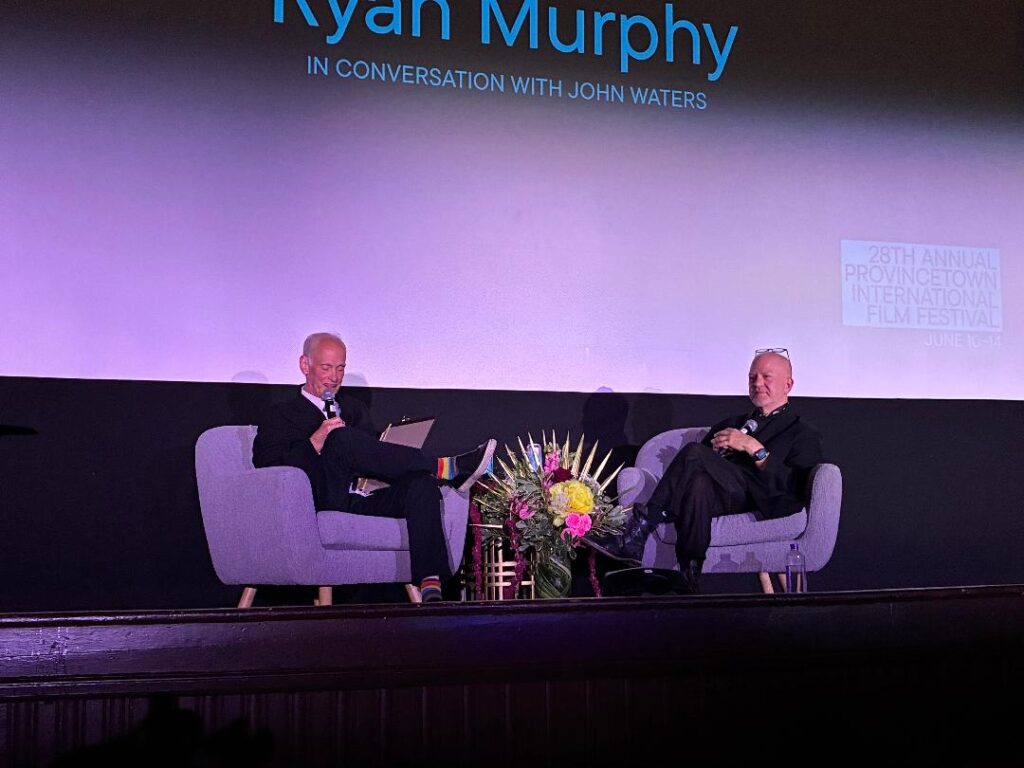
My last event at the festival was the Filmmaker on the Edge Conversation with Ryan Murphy. John Waters hosted as always and noted that this was the first time the festival had honored someone who is primarily known for his work in television. Murphy has also directed films including The Boys in the Band (2020), The Prom (2020), Eat, Pray, Love (2010), and Running with Scissors (2006). Waters is an excellent interviewer; he is always prepared, having done his homework and making sure he has a few witty remarks at the ready in case of a sudden lull in the conversation. He expressed his amazement at Murphy’s ability to create so many projects so quickly, asking him exactly how he does it. Murphy explained that he doesn’t take notes from anyone except trusted colleagues, that he has thousands of people working for him, and that most importantly, he schedules every 15 minutes of his day, every day. Waters is a very disciplined writer himself, following a pretty strict daily routine, but he asked Murphy how he finds time to attend social events or see films. The answer was that even the dinners and parties are slotted into his master grid, and that he does occasionally see movies with his teenaged son and during awards season. One of the most revealing things Murphy shared when asked how he decides what projects to take on was that every story needs to have a personal connection for him, and that he then shares that passion and vision with his teams in series of concept and tone meetings. He said that for the new Lizzie Borden episode of Monsters: Season 4, he had won a prize in kindergarten for reciting the poem about the ax murderer. Waters asked if there was any true crime topic he would shy away from, and he said “well, of course anything about children”, and when pushed to comment on trans murderers, Murphy said he did not think it was appropriate given the current political climate. To which Waters shot back, “Well, what about Psycho?” They seemed to really enjoy trading notes about their controversial creative projects, so much so that when it was time to present the award, they were told that they had forgotten to show the highlights reel of Murphy’s amazing portfolio. The audience was treated to a slick compilation of scenes from his many groundbreaking hits: Nip/Tuck, Glee, Pose, American Horror Story, Feud, Love Story, The Beauty, and more. The Filmmaker on the Edge Award was then presented to the writer/director/producer by Christine Vachon, who worked with him on the 2021 Netflix series Halston. As I write this, it occurs to me that the take-away from these true icons is that success is ultimately about taking risks, standing up for your unique view of the world against all naysayers, and developing expertise in time management.
I headed back to my hotel to retrieve my luggage, stopped in at the Harbor Lounge for a cold beverage, and walked back to the wharf to wait for the last ferry. As much I hated to leave Provincetown, (I always do), it was a lovely trip. I chatted with a young man from Colorado who had just moved to Boston where his fiancé is doing her medical residency. It was his first trip to Provincetown, and we talked about what makes the town unique, his work as an entrepreneur, and my interest in film. Ninety minutes flew by and the ferry pulled into Boston Harbor on what was a beautiful summer night. A perfect ending to another stellar film festival experience.