By Chlotrudis Independent Film Society
Rating: 4 cats
Director: Celia Maysles
Country: united_states
Year: 2008
Running time: 70
IMDB: http://www.imdb.com/title/tt1164994/
Bruce says: “Albert and David Maysles were trailblazers in documentary filmmaking. Their cinema verité style has been adopted by countless filmmakers laboring in their wake. GREY GARDENS, voted as the #1 Documentary Film among Chlotrudis members, is one of the icons in the documentary arena. David Maysles died when his daughter Celia was seven year old. She and her brother barely remember him, not only because of his dying at a young age but also because their father was never mentioned at home in the years that followed as the family was supposedly ‘protecting each other through silence.’ Before embarking on making this film Celia had not seen her uncle Al in seventeen years. Al and Celia’s mother Judy did not get along when David was alive. After his death Al sued Judy for David’s interest in their production company. The law suit dragged on and on and was finally settled to the dissatisfaction of all involved. Judy received a lump sum settlement. Al received the rights to all the Maysles’ work including David’s partially completed film, BLUE YONDER, in which Al had no creative input or technical involvement.
“Celia Maysles decided to find out who her father was by making this film. Indeed, filmmaking is a wonderful pretense for information gathering. With the help from executive Producer Henry Corra who had been mentored by her father, she has made a very personal film without the self indulgence one might expect from a novice filmmaker. Maysles insists that half the film belongs to her and half the film should be credited to her editor Charlene Rule. She is one of the few documentary filmmakers who openly acknowledge that the script is often ‘written’ by the editor after the director has gleaned the information and the images, a delightfully refreshing and honest professional approach.
“During the course of making her film Celia has many interactions with Uncle Al. At first he is surprised and pleased to meet with her. He allows her to rummage through her father’s old files and artifacts. As time passes Al becomes more wary and appears to be threatened. He becomes reluctant to let Celia see archival footage. Al expresses concerns that he film may overlap with an autobiographical film he is planning to make but cannot articulate much about his plans or what similarity in content he has in mind. In the end, Celia was not allowed to use any of the Maysles brothers’ footage for her film. To get access to clips from GREY GARDENS and other Maysles brothers’ films she made use of the fair use act which allows the ‘reproduction of a particular work may be considered ‘fair,’ such as criticism, comment, news reporting, teaching, scholarship, and research.’ Celia Maysles finally gets a stroke of good luck when the archivist for the Larry Rivers estate discovers reels of film – Rivers’ home movies – which capture her father in both social and pensive moments.
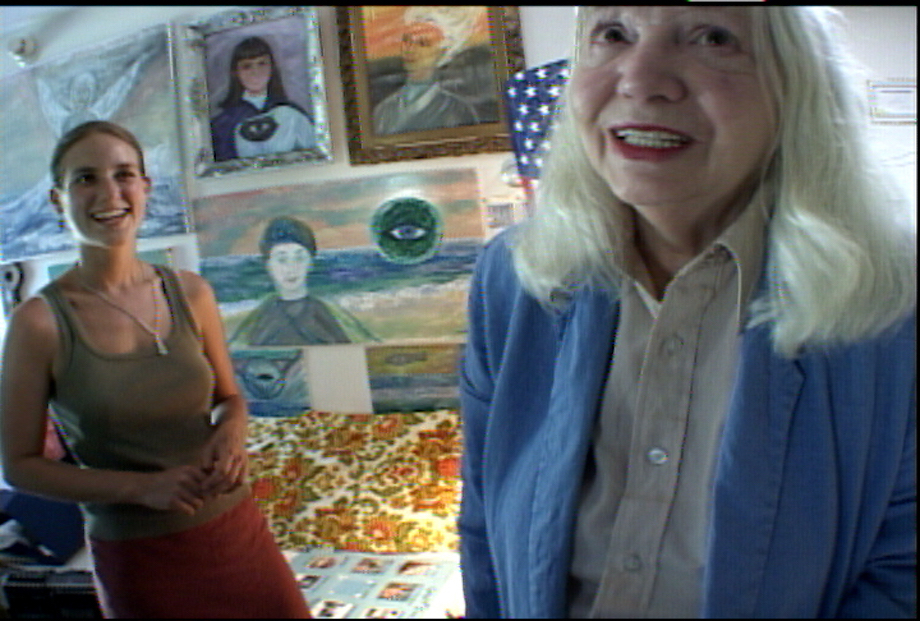
“WILD BLUE YONDER gives the viewer a personal sense of David Maysles and familiarizes the viewer with his work and style, all the while never losing sight of the fact that the film is a personal odyssey for Celia to capture the father she never knew. The film is roughly made using a hand held camera which captures its subjects at odd angles, particularly the director herself. Interviews with Lois Wright who lived with the Beales at Grey Gardens add wonderful flavor to the film. A lovely effort from a first time filmmaker. 4 cats
“WILD BLUE YONDER screened at the 2008 IFFB.”